
What Is a Silent Retreat?
A Guide to the Power of Silence and Why We Need It Now
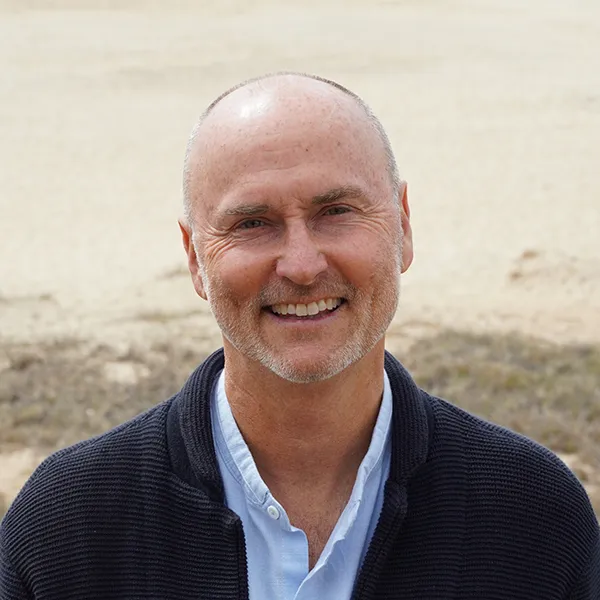
Written By Chip Conley
What is a silent retreat?
A silent retreat is an immersive experience (typically 3-10 days) in which participants practice noble silence (refraining from speech and often from eye contact), meditation, and mindful movement. Also known as meditation retreats or mindfulness retreats, these experiences serve as a profound digital detox. Research confirms these quiet retreats reduce anxiety by 35%, increase self-compassion by 40%, and may impact cellular aging. Beginners benefit most from hybrid-model retreats (like Modern Elder Academy's "Landscapes of Silence" program) that combine sitting meditation, yoga, nature immersion, and daily wisdom teachings, typically lasting 3-7 days in settings like Baja or New Mexico.
As the founder of Modern Elder Academy and someone who has navigated the turbulence of midlife firsthand, including a near-death experience at 47, I've dedicated years to understanding how practices like silent retreats can help us reconnect with what matters. This guide synthesizes that experience, the latest research, and the wisdom of the thousands of people who have come through our programs.
"Slightly wounded and tightly wound."
That's how I described myself to a longtime friend, just a couple of weeks before I died on stage in St. Louis. A silent retreat was the last thing on my mind. I was too busy running on empty.
I was 47. My long-term relationship was ending. My company was falling apart in the Great Recession. My adult foster son was going to prison for a crime he didn't commit.
I'd lost five friends to suicide (most of them in their 40s), and I'd started having nightmares about cancer and car crashes.
I felt trapped by the momentum and monotony of my life. I was yearning for a midlife pit stop, an offramp from an endless freeway where I felt I was running on fumes.
That near-death experience (what my friend Bruce Feiler calls a "lifequake") woke me up to how silently unmoored I'd become from what brought me joy. Psychologically awkward for a guy who'd started a company named Joie de Vivre.
Maybe you know some version of this feeling...
The promotion feels hollow. The kids have left (or are leaving). Your parents need more help than you expected. Your body has started sending memos you didn't ask for.
And somewhere in the relentless noise of it all, there's something inside you asking for space.
In the years since my lifequake, I've thought a lot about silence. Not just because I've spent the last several years building a place where people come to find it, but because I've needed it myself. (Trust me, founding a "wisdom school" while constantly buzzing with emails and Zoom calls creates its own special irony.)
Early on, I asked my favorite shaman, Saul, for advice on becoming more present. He said, "Find presence under a tree." And this from a Jewish shaman! I teased back, "I didn't know you celebrated Christmas—?" But I knew what he meant: that quiet and calm were waiting for me in the solace and beauty of nature. I just had to make time for it. Sit with it. Let go and pay attention to what matters.
When I feel that compulsive urge to go faster, do more, and be more, it's my cue to immediately put a little "spying on the divine" time in my calendar. I sit under a tree until I'm breathing slower and walking slower and until I am where I need to be—fully present within myself.
"The opposite of presence is absence. It's a modern condition, caused largely by our preoccupation with our devices. We all want to live healthier and longer. But what's the point of a long, healthy life if we're not truly present for it?"
If you've been feeling a pull toward stillness, you're not alone. The science, the psychology, and the lived experience of thousands suggest that what's calling you toward silence might be one of the wisest things you could listen to.
Why I Wrote This Silent Retreat Guide
We recently began offering silent retreats at MEA, and the response surprised even me. During the launch of our first "Landscapes of Silence" retreat, we received a ton of questions from curious people, intrigued, maybe a little terrified, and full of misconceptions about what a silent retreat or meditation retreat actually involves.
"I could never do that. I talk too much."
"Don't you have to be some kind of advanced meditator?"
"Isn't it like being in solitary confinement?"
I heard variations of these over and over. And I realized that silence, for all its simplicity, is deeply misunderstood.
So I wanted to write something comprehensive. Not a sales pitch for our retreats (though I'll tell you about them), but an honest exploration of what silent retreats are, what the research shows, who they're for, and how to know if one might be right for you. Whether you're searching for a quiet retreat, a mindfulness meditation retreat, or simply a place to step away from the noise, consider this the guide I wish I'd had before my first experience with extended silence.
What Exactly Is a Silent Retreat?
I want to clear something up right away.
A silent retreat is a period of time (anywhere from a day to several weeks) where you step away from ordinary life and agree to practice silence. This typically means not speaking, sometimes even not making eye contact, and definitely setting aside digital devices.
What remains is just you, the present moment, and whatever arises in that spaciousness.
I know what you might be thinking: That sounds terrifying.
I get it. I'm the guy who used to fill every quiet moment with planning, problem-solving, or (let's be honest) checking my phone.
The first time I sat in extended silence, my inner monologue wouldn't shut up. It was like being locked in a room with the most annoying person I knew—myself. I spent the first hour mentally reorganizing my closet and composing emails I'd never send.
But here's the surprise: the silence isn't punishment. It's permission. Permission to hear what's underneath all the noise, both external and internal.
What Most Silent Retreats Include
- 1Periods of seated meditation, often guided, where you learn to work with attention.
- 2Mindful movement like walking meditation, gentle yoga, or qigong. (Good news for those of us whose knees protest sitting still—you don't have to be a pretzel to benefit.)
- 3Time in nature, which offers its own teaching. Researchers have found that combining nature exposure with contemplative practices creates something greater than the sum of its parts[1]. There's a synergy between the two that amplifies stress reduction and psychological wellbeing.
- 4Shared meals eaten in silence, where taste and texture become surprisingly vivid. (I still remember the strawberry I ate on day three of my first retreat. Best strawberry of my life. Also, possibly, the most attention I'd ever given a piece of fruit.)
- 5Teachings from experienced guides who help frame the practice and support what's emerging.
What often surprises people is how gentle a well-designed silent retreat actually is. There's more spaciousness than you expect. Time to rest. Time to simply be.
Common Silent Retreat Misconceptions Worth Clearing Up
"I could never do that—I talk too much."
I hear this constantly. And here's the thing: people who are most anxious about silence often benefit most. The urge to fill space with words usually masks something worth meeting.
"I'd have to be some advanced meditator."
Not true. Many silent retreats (particularly those designed with beginners in mind) welcome people with no meditation experience at all. You don't arrive enlightened. You arrive as you are. (Which, let's face it, is the only way any of us ever arrives anywhere.)
"It sounds harsh, like punishment."
A retreat designed with care is held with warmth and understanding. Silence reveals what needs attention—and this can be met with compassion, not judgment.
"I can't sit still that long."
Neither can I, frankly. Good retreat centers offer modifications: chairs instead of cushions, walking meditation alternatives, permission to move as needed. The practice is about awareness, not achieving some perfect posture that would make a yoga Instagram influencer proud.
The Proven Benefits of Silent Retreats: What the Science Shows
The Stanford MBA in me never quite goes away, so I appreciate evidence alongside experience. The research on meditation and contemplative practice has gotten pretty solid over the past two decades, solid enough that even my most skeptical friends have stopped rolling their eyes.
Key Research Findings on Silent Retreats:
What the Studies Show About Mental Health
In 2014, researchers at Johns Hopkins analyzed 47 randomized controlled trials involving more than 3,500 participants. What they found was significant: mindfulness meditation programs showed meaningful improvements in anxiety, depression, and pain[2].
Not a cure-all, but a measurable impact on conditions that affect millions of us. I found that reassuring when I was first exploring this stuff. It wasn't just woo-woo.
The effects of multi-day silent retreats appear even stronger. When researchers followed participants through intensive meditation retreats, they documented significant reductions in anxiety and depression that were still present ten months later[3].
Ten months! That's not a weekend high that fades by Tuesday.
Another study tracked people through a 3-month intensive retreat and found improvements in attention and psychological well-being, along with actual neural changes visible on brain scans[4].
These aren't small shifts. We're talking about the kind of changes that affect how you move through your day. How you respond when your teenager rolls their eyes. How you handle the email that would typically send you into a spiral.
(I still get those emails. I'm just slightly less reactive. Slightly.)
Your Brain on Silence
Researchers at Massachusetts General Hospital took people through an 8-week mindfulness program and scanned their brains before and after. What they found surprised even them: increased gray matter in the hippocampus (the area involved in learning and memory) and in regions associated with self-awareness and compassion[5].
At the same time, they saw decreased gray matter in the amygdala, which is essentially your brain's alarm system.
Other research has shown that experienced meditators develop thicker cortical regions in areas related to attention and processing sensory input[6]. Your brain is literally reshaping itself in response to practice.
What this means practically: after sustained practice, people notice they can respond to stress more calmly instead of reacting on autopilot. There's a pause where choice becomes possible.
I've experienced this myself. I'm still the same guy who can get spun up about things that don't matter. But now there's a little more space between stimulus and response.
A tiny moment where I can catch myself before I send the snarky email. (Not always. But more often than before. My team would probably say "slightly more often." They're not wrong.)
The Telomere Connection and Physical Health
Now here's where it gets personal for those of us thinking about aging well. (And if you're reading this, I'm guessing that's most of you.)
Telomeres are the protective caps on the ends of your chromosomes. Every time your cells divide, these caps get a little shorter. Eventually they get too short, and that's associated with aging and age-related diseases.
In 2011, researchers found something remarkable: people who underwent intensive meditation retreats showed significantly increased telomerase activity, the enzyme that helps maintain telomere length[7].
A more recent study found that just three weeks of intensive meditation was associated with changes in the expression of genes related to immune function, inflammation, and cellular aging [8].
Other research has shown that mindfulness training can reduce inflammatory markers in the blood[9]. Another study found improvements in immune cell function and reductions in blood pressure after meditation retreats[10].
The inner work of paying attention may have protective effects at the cellular level. Not just feeling calmer. Actually impacting how your body ages.
I don't know about you, but that got my attention. I spent my 40s feeling like my body was betraying me. The idea that sitting still might actually help? Boy, was I skeptical. But the research kept piling up.
The Self-Compassion Factor
Research on people attending silent retreats has documented some pretty striking changes. One study found significant decreases in negative emotions and increases in self-compassion, with a 35% reduction in rumination and depressive symptoms[11].
That inner voice that rehashes every mistake you've ever made? It actually quiets down.
Another found that retreat participants showed a 40% increase in self-compassion scores, and importantly, these improvements stuck around at the 3-month follow-up[12].
Learning to be kinder to yourself in ways that actually stick. That's not small. Most of us spend decades perfecting our inner critic. (Mine has won several lifetime achievement awards.)
The idea that you can actually dial down that volume is quietly revolutionary.
Psychological and Emotional Benefits of Silent Retreats
Beyond laboratory measurements, there's what people actually experience when they spend extended time in silence.
Your Body On Silence


Brain

Eyes

Heart

Gut

Muscle / Joints

Cells
These benefits are associated with regular meditation practice. A single retreat is a powerful start-ongoing practice helps them stick.
The Mental Noise Finally Quiets
Silence reduces constant mental chatter—what Buddhists call "monkey mind."
Psychologists studying this phenomenon talk about "decentering," the ability to observe thoughts and emotions from a bit of distance[14]. When that internal radio finally quiets, you notice what's underneath.
Old grief you've been too busy to feel.
Creative insights that couldn't get through.
Clarity about relationships or decisions obscured by noise.
This isn't always comfortable. Let me be honest: sometimes it's the opposite of comfortable. I've ugly-cried on retreat more than once.
The silence doesn't create the feelings. It just stops you from outrunning them.
You Learn to Watch Your Thoughts Without Believing Them
Silent retreats create what psychologists call "decentering" or "metacognitive awareness," the ability to observe thoughts and emotions without being entirely identified with them[15].
You begin to notice: "Oh, there's that story about how I'm never good enough. There it is again. It's a thought, not a fact."
Research suggests this decentering capacity is actually one of the key mechanisms through which mindfulness reduces depression and anxiety[16]. You realize you don't have to believe every thought.
Don't have to react to every emotional weather pattern that blows through.
This was a revelation for me. I spent most of my early adulthood completely merged with my thoughts. If I thought it, it must be true.
Learning to watch thoughts without automatically believing them was like discovering I'd been wearing someone else's glasses my whole life.
Perfect for Midlife Transitions
For people navigating midlife transitions, silent retreats and quiet retreats offer invaluable space to grieve what's ending and clarify what wants to begin.
Research on adult development shows that midlife often involves significant identity transitions, and contemplative practices can support the psychological flexibility you need during these periods [17].
When you're not performing your usual roles and identities, not "on" for anyone, you get to ask more profound questions:
Who am I without my job title?
What do I actually want in this season of life?
What have I been carrying that's no longer mine to carry?
Life is not a one-tank journey. We need to pull over sometimes and refuel.The Gift of Self-Compassion
Many describe self-compassion as the most unexpected gift.
Not peak experiences or profound insights, but the simple, radical act of befriending themselves.
When you've sat with yourself in silence for days, watched your mind do its anxious, self-critical thing over and over, something softens. You begin to see yourself with more tenderness.
Research by Kristin Neff and Christopher Germer has shown that self-compassion (treating yourself with the same kindness you'd offer a good friend) is strongly associated with psychological well-being and resilience[18].
Silent retreats and meditation retreats appear to be particularly effective at cultivating this quality.
The inner critic's volume drops.
Who Should Attend a Silent Retreat or Mindfulness Retreat? (And Who Should Wait)

Silent Retreats Are Ideal For People Who:
You don't need to be particularly spiritual, though if you are, that's welcome too. MEA's silent retreats are non-religious and open to people of all backgrounds and beliefs.
Many come with no faith tradition or meditation background. Just a sense that their current way of living isn't sustainable and something needs to shift.
Sound familiar? That describes about 90% of the people I meet at MEA. It described me at 47.
When to Wait or Get Additional Support
Silent retreats aren't appropriate for everyone at every moment. I want to be honest about this.
If you're in an acute mental health crisis (experiencing suicidal ideation, active psychosis, or severe untreated depression), a silent retreat is not the right container. Individual therapy or medical care would be the first supportive steps.
Research on meditation and mental health emphasizes the importance of proper screening and support, particularly for individuals with trauma histories or active psychiatric conditions[19].
Similarly, if you're processing very recent trauma (within the past few months), the intensity of a silent retreat might be destabilizing rather than helpful. Working with a trauma-informed therapist first is wise.
If you have concerns, consult your healthcare provider and communicate openly with retreat organizers. Good centers welcome these questions and help you assess readiness.
The point is not to exclude anyone, but to honor that different people need different things at different times.
Types of Silent Retreats: Vipassana, Mindfulness, Hybrid, and Nature-Based
Not all silent retreats are created equal. Understanding the different approaches helps you find what resonates.
Traditional Vipassana: For the Rigorous
Rooted in Buddhism, these meditation retreats follow strict schedules with 10-12 hours of daily practice over 10+ days.
Noble silence (no speaking, no eye contact) maintained throughout.
They're intensive, rigorous, and resonate with people who want to go deep quickly and are comfortable with traditional Buddhist framing. Traditional 10-day Vipassana meditation retreats at centers worldwide are offered free on a donation basis.
(Full disclosure: I did one of these in my late 40s. It was one of the most challenging and most transformative things I've ever done. Also, my knees have never fully forgiven me.)
Secular Silent Retreats: For the Modern Explorer
Drawing on Buddhist practices but presented in secular, psychologically informed language, secular silent and meditation retreats make teachings accessible to people from any background.
The emphasis is on stress reduction, emotional regulation, self-compassion, and practical application to daily life. This approach has been validated by extensive research on programs like Mindfulness-Based Stress Reduction (MBSR) and Mindfulness-Based Cognitive Therapy (MBCT)[20].
Many are explicitly designed for beginners. Gentler structures with more spaciousness. Daily teaching sessions where silence is lifted for instruction and questions. Accessible language grounded in both psychology and contemplative wisdom.
Nature-Based Quiet Retreats: When the Land Becomes Teacher
Some silent retreats emphasize relationship with the land: extended time outdoors, solo sits in nature, walking meditation on trails where the only sound is wind.
High desert landscapes like those at our 2600-acre ranch campus offer vast horizons and ancient stillness. The kind of spaciousness that mirrors the inner space you're cultivating.
Ocean settings in places like our Baja campus, provide wave rhythms as constant meditation. A reminder of impermanence and flow.
Research shows that combining nature exposure with mindfulness practice produces synergistic benefits for stress reduction and psychological well-being [21]. In a nature-based quiet retreat, the environment becomes part of the practice itself.
My MEA cofounder, Jeff Hamaoui, discovered this when he first arrived in Baja. As he put it, "Far from being institutionalized, the spirituality in Baja is ingrained in the experience of the place itself. The ocean, the mountains, the endless skies, the dazzling stars—they inspire a kind of daily reverence that you almost have no choice but to participate in."
Hybrid Silent Retreat Models: Weaving Multiple Approaches Together
This is where my heart is, and it's often the most accessible entry point for people who've never done a silent retreat before.
Hybrid models blend multiple practices and wisdom traditions. Meditation with yoga. Seated practice with walking meditation and mindful movement. Silence with what we call "Wisdom Pods": one-hour daily periods when silence gently lifts for contemplative teachings and discussion.
These teachings might draw from Christian mysticism, Buddhism, Judaism, Sufism, shamanic traditions, and other contemplative sources. The point is not to make you an expert in any one tradition, but to expose you to the breadth of human wisdom about presence, silence, and inner work.
This approach recognizes that different people access insight through different doorways.
Some people need to move their bodies to quiet their minds. (I'm one of them. Sitting still for hours makes me twitchy.)
Others need to hear teachings from multiple angles before something clicks.
Still others benefit from the variety itself. The rhythm of sitting, moving, listening, and being in nature creates a more sustainable container than 12 hours of seated meditation daily.
When we developed this hybrid approach at MEA, we specifically did so for the unique developmental needs of midlife and beyond. We now call these our "Landscapes of Silence" retreats.
Rather than adapting traditional monastic models designed for younger seekers or lifelong practitioners, we acknowledged that people in their 50s, 60s, and 70s often need different containers.
Bodies that require more movement options. (Heckuva lot of us have dodgy knees.)
Life experience that benefits from multiple wisdom perspectives.
Questions about mortality and meaning that call for specific kinds of holding.
We offer this hybrid approach at both our Baja oceanfront campus and Santa Fe high desert ranch. Two extraordinary settings that couldn't be more different, yet both invite stillness naturally from the landscape itself.
Baja, Mexico
El Pescadero Resort
In Baja, you wake up to the sound of waves in El Pescadero. Not in a romantic, postcard way, but in an insistent, can't-ignore-it way. After a few days, you stop noticing. That's when you know the silence is working. Morning practice unfolds on our beachfront yoga platform as the sun comes up over the Pacific. Evenings end in a quiet community beneath more stars than you've probably seen in years.
Santa Fe, USA
Rising Circle Ranch
In Santa Fe, you're on nearly 2,600 acres of regenerative high desert ranch. The land has a particular quality of stillness. Ancient, patient, like the mesas themselves, have been practicing presence for millennia. Walking meditation happens on trails through piñon and juniper, past petroglyphs left by people who sat in this same silence centuries ago. The first time I walked those trails, I understood why people have been coming to the desert to find themselves for thousands of years.
Both locations include daily Wisdom Pods led by our faculty, soundbaths, restorative yoga, guided meditations both indoors and in nature, and meals prepared by chefs who could work anywhere but chose to feed midlifers instead. (Their loss is our gain.) Meals are eaten in silence, where each bite becomes an act of presence.
Our faculty (including Teddi Dean, Head of Mindfulness and Movement; Amie Tullis; Lee Johnson; Saul Kuperstein, our resident shaman; and sometimes me) are all midlifers ourselves who have navigated our own periods of reinvention.
We're not gurus dispensing wisdom from on high. We're fellow travelers who've found some things that work. The MEA Method is informed by academics from Stanford, Harvard, UC Berkeley, and Yale who have dedicated themselves to understanding modern midlife. Over 7,000 people from 60 countries have now come through our programs.
We cap groups at 28 people. Big enough to find your people, small enough that you won't get lost in a crowd.

Retreat Style | Best For | Intensity | Duration | Cost Range | Beginner-Friendly? |
|---|---|---|---|---|---|
Traditional Vipassana (Silent Meditation Retreat) | Experienced meditators comfortable with Buddhist teachings | Very High | 10+ days | Donation-based | Moderate |
Hybrid Model (like MEA's Landscapes of Silence) | Midlife navigators, first-timers, those wanting variety | Moderate | 3-7 days | Starting at $1,900 (all-inclusive) | Very High |
Faith-Based Quiet Retreat | Christians seeking contemplative practice | Varies | 3-8 days | $500-$2,000 | High |
Nature-Based Mindfulness Retreat | Those who connect deeply through land and wilderness | Moderate | 3-7 days | $800-$2,500 | High |
What Happens at a Silent Retreat? A Typical Daily Schedule

Let me walk you through what a typical day looks like at one of our Landscapes of Silence retreats, so you can get a feel for the rhythm.
Morning: Waking to Stillness
You wake before dawn. Maybe to gentle bells, or maybe you naturally open your eyes as light begins to shift.
You dress in comfortable layers and head to the practice space.
In Baja, morning begins on our beachfront platform as the sun comes up. The ocean is loud at first. You notice that. Then you stop noticing. You're breathing with the tide without realizing you've synced up.
In Santa Fe, you might begin with gentle movement as light fills the high desert sky, the Sangre de Cristo mountains just beginning to glow pink. There's a quality of quiet here that's almost physical. Like the land is holding its breath with you.
The movement unfolds like meditation itself. Nothing forced or performative.
Then seated meditation. Maybe 30-40 minutes, guided at first. The teacher invites you to find your seat, settle into your breath, and notice the quality of attention in this fresh morning mind.
You're not trying to achieve anything. Just arriving fully in this moment. (Easier said than done. My mind still wanders constantly. The difference is I've stopped beating myself up about it.)
Breakfast: The Art of Tasting
Breakfast is silent.
You move through the line, filling your plate mindfully. Our culinary team has prepared meals from scratch using fresh local ingredients, often straight from our organic gardens. Textures and colors become vivid without conversation.
You eat slowly, tasting each bite. Noticing the exact moment when hungry becomes satisfied.
The silence in the room is not awkward. There's a quality of shared reverence.
(I remember my first silent meal. I was terrified I'd make some embarrassing noise. My stomach growling, chewing too loudly, something. Then I realized everyone was too busy paying attention to their own experience to notice mine. Liberation.)
Mid-Morning: Nature and Teaching
After breakfast, time in nature.
In Santa Fe, you might walk meditation trails through arroyos, past ancient petroglyphs, through piñon and juniper on nearly 2,600 acres. In Baja, you might walk along the beach, bare feet on sand, wind on skin.
The natural world moves at its own pace, unbothered by your to-do list. Something in you begins to slow down to match.
Mid-morning might bring another sitting, indoor or outdoor guided meditation, or restorative yoga (poses held for long minutes, allowing the body to release what it's been carrying).
Afternoon: Wisdom Pods and Spaciousness
Lunch, again in silence. You notice you're hungrier than usual. More present to the act of eating.
Then comes the Wisdom Pod, a one-hour gathering where silence gently lifts.
Our faculty offers teachings drawn from contemplative traditions: Christian mysticism, Buddhism, Judaism, Sufism, shamanic wisdom. Maybe today it's about working with resistance. Maybe it's a teaching from the Desert Fathers, or a Sufi poet, or contemporary neuroscience about how the brain processes silence.
There's space for quiet discussion if you want it, or you can remain in silence. Either choice is honored. If you wish to stay in complete silence throughout your retreat, your preference will be fully supported.
The afternoon otherwise is spacious.
Time to rest. To journal, if that's your practice. To nap if your body asks. To walk. Time to find a spot (beside a juniper, in a hammock with ocean breezes) and simply sit there, doing nothing except being present.
This spaciousness is intentional.
You're learning that not every moment needs to be filled. That rest itself is a practice. That life does not always require effort and doing.
(For achievers like me, this part is both the hardest and most important. I spent the first two days of my first retreat fighting the urge to "accomplish" something. By day three, I finally surrendered. That's when things started to shift.)
Evening: Closing the Day
Late afternoon might include a soundbath, waves of sound that activate your parasympathetic nervous system and support deep rest. Neuroscientist Stephen Porges has documented how these kinds of practices support stress recovery and a sense of safety[22].
Dinner continues the silent rhythm.
Then, as the sun sets (gold melting into pink and violet across the sky), you gather for evening practice. In Baja, it's on our beachfront platform beneath the stars. In Santa Fe, it's around fire under the vast desert sky.
The teacher offers a short reflection. A reminder that this practice is not separate from your life but preparation for it.
You return to your room. The pillow's cool side feels like mercy.
You lie in darkness, aware of breath, aware of settledness growing all day.
The silence no longer feels strange. It feels like relief.
Best Silent Retreats for Beginners
If this is your first silent retreat, certain features make the experience more accessible and sustainable.
Location-Based Options for Beginners
Oceanfront silent retreats in Baja offer the soothing rhythm of waves as a natural aid for meditation. The sound becomes an anchor when the mind wanders. At our El Pescadero campus, you're above the Pacific in a quiet fishing village on the southern tip of the Baja Peninsula.
The meeting of desert and sea creates spaciousness. Vast enough to feel held by something larger, intimate enough to feel safe. There is no more powerful way to begin a new year than stepping into this kind of quiet.
High-desert silent retreats in Santa Fe offer vast, open spaces that mirror the inner spaciousness you're cultivating. At our Rising Circle Ranch, you're on nearly 2,600 acres featuring traditional Pueblo architecture, hiking trails through arroyos, and ancient petroglyphs that remind you humans have been seeking stillness on this land for centuries.
The first time I walked those trails, I felt small in the best possible way. My worries felt smaller against ancient mesas and endless sky. Sometimes that's exactly what you need.
Key Features That Make Silent Retreats Beginner-Friendly
How to Choose the Right Silent Retreat or Meditation Retreat
If you're ready to explore, here's how to find something that fits.
For First-Time Participants, Look For:
MEA offers exactly this kind of hybrid-model silent retreat, what we call our "Landscapes of Silence" program, in both Baja and Santa Fe, designed explicitly for people in midlife.
Our approach combines sitting meditation, gentle movement and yoga, walking meditation in extraordinary natural settings (oceanfront in Baja, high desert ranch in Santa Fe), restorative practices like soundbaths, and daily Wisdom Pods where experienced faculty share teachings from Christian mysticism to Buddhism, Judaism to Sufism, and shamanic traditions.
The experience is all-inclusive: accommodations, chef-prepared meals using locally sourced ingredients, snacks and drinks throughout the day, and full use of our campus amenities.
Questions to Ask Yourself
Questions to Ask Retreat Centers
How retreat centers respond to these questions tells you a lot about their values.
Common Questions About Silent Retreats and Meditation Retreats
Are silent retreats worth it?
Research shows significant benefits including 35% reduction in anxiety, 40% improvement in self-compassion, and changes in brain structure related to emotional regulation[11,12]. Most participants report that the benefits persist for months after returning home [3].
Beyond the research, people consistently describe silent retreats as among the most meaningful experiences of their lives. Not because they're easy or comfortable, but because they create conditions for encountering yourself with unusual honesty and compassion.
I've hosted thousands of people at MEA over the years. The ones who come through our silent retreats often describe them as pivotal. Something about the combination of silence, nature, and community creates conditions for a genuine shift.
Can you talk at all during a silent retreat?
This varies by retreat style.
Traditional Vipassana maintains complete silence except for scheduled meetings with teachers.
Hybrid-model retreats like our Landscapes of Silence program include daily one-hour Wisdom Pods where silence gently lifts for contemplative teachings and group discussion. You're also welcome to remain in full silence during these sessions if you prefer. Your choice will be fully honored. Some participants stay in complete silence the entire week; others appreciate the balance of solitude and gentle connection.
What do you do all day at a silent retreat?
Days include guided meditations both indoors and in nature, gentle movement and yoga, restorative yoga, soundbaths, walking meditation on trails (beach in Baja, ranch land in Santa Fe), one Wisdom Pod teaching session, and spacious free time for rest or reflection. Evenings gather in contemplative community: on our beachfront platform in Baja, around fire under the stars in Santa Fe.
The rhythm is spacious and restorative, designed to help you slow down, not keep up. You're not grinding through 12-hour meditation marathons.
How do I prepare for my first silent retreat?
Start a basic meditation practice. Even 10 minutes daily for a few weeks builds familiarity with sitting still and watching your mind. Research shows that even brief daily practice can improve attentional control and emotional regulation[24].
Reduce stimulation in the week before. Less news, social media, screen time. Go to bed earlier. Take walks without your phone.
Handle logistics so you can fully unplug. Set up auto-replies. Delegate urgent matters. Tell family where you'll be.
Pack simply. Comfortable layers, toiletries, medications, journal if you use one.
Clarify your intention for attending. Write it down. This becomes an anchor when things get difficult.
How long should my first silent retreat be?
3-7 days is ideal for most people. Long enough to settle in and experience the deeper benefits. Not so long it feels overwhelming.
Will I really be able to handle the silence?
Almost everyone worries about this. And almost everyone is surprised how manageable it is within a structured container with experienced teachers and a group all practicing together.
Our experienced faculty understands this concern and provides compassionate support when needed. You can always step out for air, connect with a teacher, or adjust your participation level. Many find the natural silence of places like the high desert or oceanfront surprisingly comforting. The rhythm of waves or the vastness of the landscape becomes an anchor rather than an obstacle.
The first day or two might feel challenging (that's normal). By day three, most people don't want the silence to end.
What if I have a mental health condition?
Many people with depression or anxiety benefit greatly if they're stable on medication and in ongoing therapy. Research shows mindfulness-based interventions can be effective complements to standard treatment for many conditions[25].
If you're in acute crisis or processing very recent trauma, wait. Consult your healthcare provider first. Communicate honestly with retreat organizers about your situation.
Good centers want to have these conversations. They want you to succeed, which means helping you find the right timing.
How much does a silent retreat cost?
This varies widely.
At Modern Elder Academy, our Landscapes of Silence retreats start at $1,900 for shorter programs, with all-inclusive tuition covering lodging at our campuses, chef-prepared meals, snacks and beverages, all programming and activities, and full use of campus amenities. We also offer partial scholarships on a needs-aware basis through the Association for Growth and Education. Don't let cost alone prevent you from asking about options.
What about dietary restrictions?
Most retreat centers accommodate vegetarian, vegan, gluten-free, and major allergies if you communicate them when you register.
Many serve primarily plant-based, locally sourced meals prepared with intention. The food is typically simple, wholesome, and surprisingly delicious when eaten mindfully.
What happens when I return to regular life?
This is where integration becomes crucial.
Build in transition time. A day off before returning to work helps immensely.
Establish or recommit to a daily mindfulness practice, even just 10 minutes. This is the single most important thing you can do. Research shows that continued practice maintains and deepens the benefits gained during retreats[26].
Connect with others who practice. Community provides ongoing support.
Return to retreat periodically. Many people find that annual or twice-yearly retreats become essential to their well-being.
Be patient with yourself. Integration is a process. Some insights take months to fully unfold in your life.
Moving Toward Silence
Silence is calling more people now because we need it.
Not as luxury or indulgence, but as necessity. A way to hear ourselves think. To feel what we actually feel. To remember that beneath all the doing and performing, there's a basic aliveness that doesn't require our constant effort.
The research tells us sustained contemplative practice impacts emotional resilience, cognitive function, possibly even how our cells age[7,8].
The psychology tells us silence allows us to process grief, release old conditioning, develop metacognitive awareness, clarify what truly matters[14,15].
But more than any study or theory, what pulls people toward silent retreats is simpler: an intuition that this would be good for them.
If that intuition is alive in you, it's worth listening to.
The Invitation
The modern world will not slow down. The demands will not decrease. The noise will not quiet itself.
If you want silence, you have to choose it. Deliberately.
Find teachers who seem trustworthy and grounded. Find a container that feels safe enough to let your guard down. Find a place whose beauty speaks to something in you.
And then go.
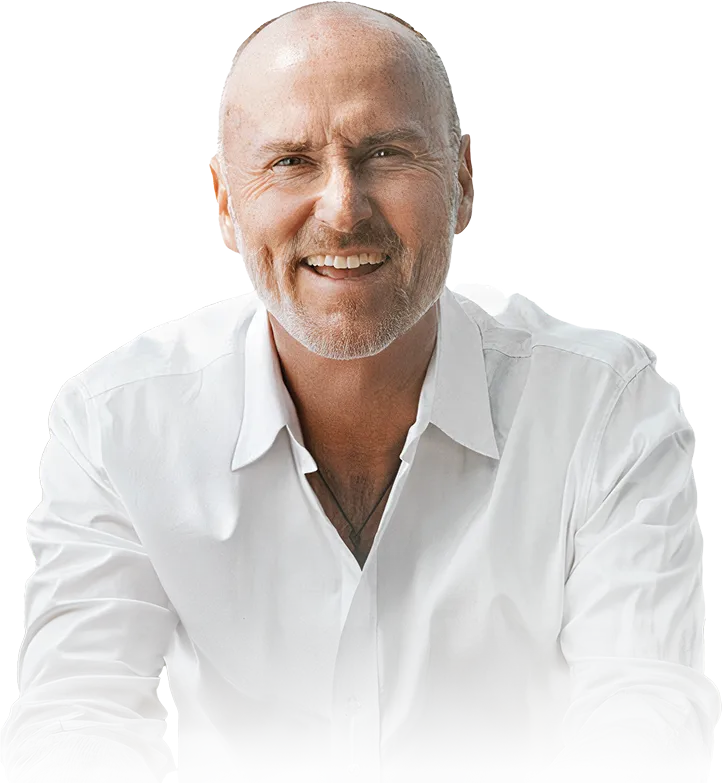
Not someday when you have more time. That day won't come. (Trust me—I've been waiting for it my whole life.)
The world will still be there when you return. Your responsibilities, your relationships, your challenges. They'll be waiting.
But you'll meet them differently.
Explore Your Options
If you've read this far and felt a stirring, trust that. Over 7,000 people from 60 countries have now come through Modern Elder Academy's programs. Many say our silent retreats were among the most meaningful experiences of their lives.
Our "Landscapes of Silence" retreats are offered throughout the year at both our Baja oceanfront campus and Santa Fe high desert ranch.
If you're not sure which retreat is right for you, our MEA Advisors (all alumni themselves) are happy to share their experiences and help you find the right fit. Schedule a free call to explore your options.Related Reading
Ready to step into stillness? Modern Elder Academy's "Landscapes of Silence" retreats combine meditation, movement, soundbaths, and wisdom teachings from multiple traditions—designed specifically for people navigating midlife. No previous meditation experience required. Partial scholarships available.


Have questions? Connect with an MEA Advisor, all alumni who can share genuine insights about their experiences.

About the Author
Chip Conley
MEA Co-Founder and Author of Learning to Love Midlife: 12 Reasons Why Life Gets Better with Age
A three-time TED speaker on the big stage, Chip Conley is one of the world's leading experts at the intersection of business innovation, psychology and spirituality.
As one of the creators of the boutique hotel movement and the "modern elder" to the young Airbnb founders, Chip's been a disruptor and expert on entrepreneurship and business leadership. He’s a globally-recognized thought leader on the future of work and the competitive advantages of a multi-generational workplace.
Inspired by his experience of intergenerational mentoring as a “modern elder” at Airbnb – where his guidance was instrumental to the company’s extraordinary success – Chip founded MEA and has since dedicated his midlife years to reframing the concept of aging and helping people navigate midlife with a renewed sense of purpose and possibility.
References
