
Retirement on Trial: Life after Law for Attorneys & Judges
Stephen Herman
Canadian civil litigator, documentary filmmaker, and co‑creator of Retirement on Trial
Evelyn Neaman
Program leader, justice educator, filmmaker, and wellness practitioner
The most important case of your legal career isn't in a courtroom. It's the one you haven't started preparing yet – your retirement.

The stakes are higher than most cases you've handled, the timeline is real, and the client is you.
You've put in decades in courtrooms and chambers, through negotiations that ran past midnight and never-ending depositions. Your calendar is still full. Your colleagues still bring you tough problems. The corner office still has your name on the door.
And in that calendar, somewhere, there's a meeting with yourself you keep rescheduling – the one about what happens next once you’re ready to retire.
For attorneys and judges, this is a uniquely hard transition. The financial side, you can handle, but the harder questions don't show up on a balance sheet:
What does life look like when it's no longer organized around your caseload?
What gives your days structure and meaning when you're no longer a partner, a senior associate, or a judge on the bench?
For someone who makes a living having answers, how long can you go without one?
Without a plan, most lawyers and judges don't make a clear decision about retirement. They keep avoiding it until the decision gets made for them – whether by health, firm politics, family pressure, or burnout.
You're going to step back from full-time practice eventually. The only question is whether you design that transition deliberately, on your terms, or let circumstances decide for you.
You want to bring the same care to this transition that you brought to every major decision in your career.
What you really want is a way of living that feels deliberate instead of improvised – something that gives you:
This is where you put your retirement on record.
This three‑day, interactive deep dive uses processes you already know – trial preparation and opinion writing – to treat your retirement as one of the most important cases of your career.
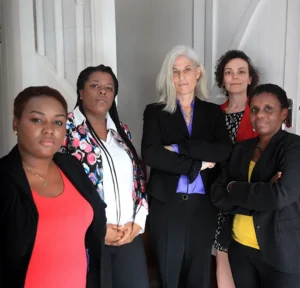
Stephen Herman and Evelyn Neaman are a husband-and-wife team who bring together the worlds of law, filmmaking, and facilitation. Stephen continues to practice law, while Evelyn has spent more than 30 years working within the legal field as a program leader, educator, and wellness practitioner.
You’ll watch Retirement on Trial with a room of legal peers and use it as a springboard.
The film weaves together voices from lawyers and judges in Canada, the United States, Guyana, and Israel, plus perspectives from a neurosurgeon and a social philosopher. Together, they look at retirement the way most CPD courses don’t – through identity, purpose, community, boredom, and the fear that stepping away means becoming irrelevant.
In Santa Fe, you’ll take that conversation further.
You'll unpack the themes together, then turn the lens on your own situation using a structure that already feels natural – evidence, options, risks, and judgment.
Over three days, you’ll stay close to the questions that matter most – who you are without your role, how you want your days to feel, which responsibilities you still want to hold, and what you’re willing to change to make that real.
During your three days in Santa Fe, you will…
Look at retirement with fresh eyes.

Gather evidence from your own life.

Learn from peers and from the film’s “witnesses.”
Face things with clear eyes and acceptance.

Build a case‑worthy plan for life after full‑time practice.
Design your support system.

Commit to concrete next steps.
You’ll be doing this work in Santa Fe’s high desert light, with time between sessions to walk the land, sit under the big sky, and let your thinking catch up with your life.
This workshop
is for you if…
Wellness sessions built for lawyers and judges
For more than two decades, Evelyn has taught yoga and restorative practices to judges, prosecutors, and lawyers who spend their days under constant mental load.
In Santa Fe, she'll offer optional yoga sessions plus breathing practices you can use before a hard conversation or after a draining hearing. No experience or flexibility required – these sessions are designed for everyone.
Get CLE credit for the most important planning you'll do this year
This retreat may be eligible for Continuing Legal Education (CLE) credit, depending on your State Bar or accrediting body. The curriculum touches core areas such as professional responsibility and ethics, practice management, lawyer wellness and mental health, and long‑term career sustainability. You’ll need to confirm the details with your own bar, but the program is designed with CLE standards in mind.
Meet your faculty
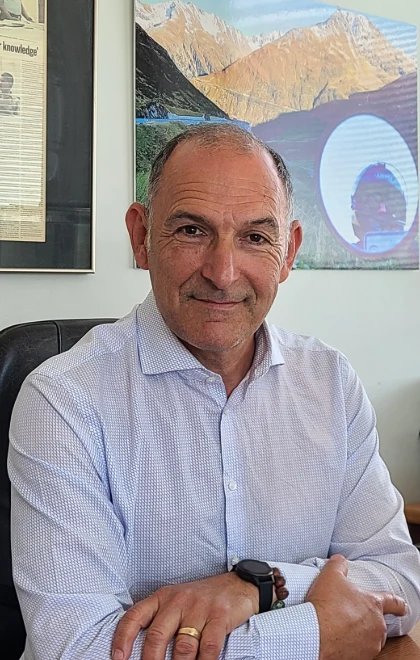
Stephen Herman
Canadian civil litigator | documentary filmmaker and co‑creator of Retirement on Trial
Stephen Herman is a Canadian civil litigator with more than three decades of experience helping clients through legal disputes while championing advocacy and professional collegiality. Like many lawyers, he eventually faced two questions his legal training couldn't answer: Is there more to life than the practice of law**?** And what happens when the career that defined you ends?
Those questions sent him from the courtroom to the camera. While still practicing, Stephen began making documentary films exploring justice and social impact in Ethiopia, Central America, Guyana, and Vietnam – work that opened new pathways for creativity and, paradoxically, renewed his commitment to the law.
His film, Retirement on Trial, wrestles with a question most lawyers prefer to avoid: how to face the end of a defining career. Framed as a courtroom-style inquiry with a touch of humour, Stephen takes on the case of his career – defending retirement. Lawyers, judges, and other professionals testify, revealing their fears, their assumptions, and the possibilities they hadn't yet considered.
“By the end of making this film, I realised retirement isn’t a single verdict – it is a series of conscious rulings you make about how you want to live.”
~ Stephen Herman ~
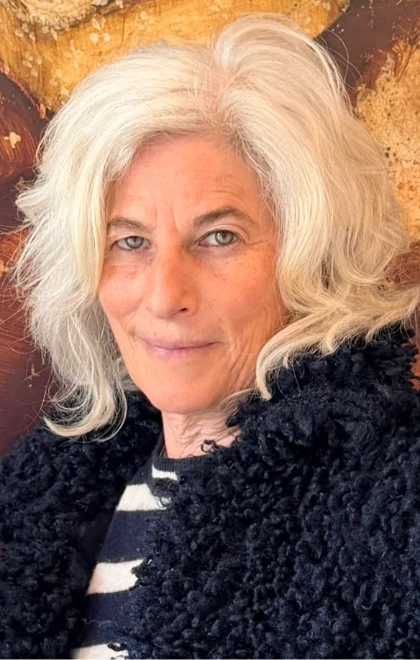
Evelyn Neaman
Program leader, justice educator, filmmaker, wellness practitioner
Evelyn Neaman is a Vancouver-based program leader, educator, filmmaker, and wellness practitioner with more than 30 years of experience advancing access to justice in Canada and internationally. During her tenure with the Justice Education Society, she designed and led complex initiatives and training programs involving the public, judiciary, lawyers, and police, in Canada and in countries such as Ethiopia, Central America, Guyana, and Vietnam.
Together with Stephen, she's created documentaries and success stories that translate complex institutional change into compelling narratives. That experience informs her work on Retirement on Trial, where she served as producer, writer, and director. Drawing on her background in cultural anthropology and curriculum design, as well as her own career transition, she brings a distinctive lens to the film's exploration of how identity, purpose, and community evolve in later career stages.
For more than 25 years, Evelyn has also taught yoga and mindfulness practices to diverse audiences, including judges and lawyers, locally and internationally. She brings particular insight into stress management for people working in the legal field, and runs a boutique yoga studio in Vancouver.
“We don’t pretend to have the answers about what you should do. What we do know is how to ask the right questions, help people get curious, and make it easier to let go of their fears.”
~ Evelyn Neaman ~
Our Agenda at a Glance
Monday:
Tuesday:
Wednesday:
Thursday:
4:00 PM: Check-In / Welcome
5:30 PM: Welcome Reception & Dinner
7:00 PM: Orientation Session
9:00 PM: Free Time
Friday:
7:30 AM: Mind + Body
8:30 AM: Breakfast
10:00 AM: Classroom Time
1:15 PM: Lunch
2:00 PM: Free Time
3:00 PM: Classroom Time
5:30 PM: Free Time
6:30 PM: Dinner
Saturday:
7:30 AM: Mind + Body
8:30 AM: Breakfast
10:00 AM: Classroom Time
1:15 PM: Lunch
2:00 PM: Free Time
3:00 PM: Classroom Time
5:30 PM: Free Time
6:30 PM: Dinner, Dessert & Graduation
8:00 PM: Evening Gathering
Sunday:
7:00 AM: Breakfast
9:30 AM: Checkout / Departure
*Please note all times are estimates and not all “classroom activities” take place in the actual classroom. This agenda is meant to give you an idea of the general flow of activities.
Step into transformation in the high desert
Rising Circle Ranch | Santa Fe, USA.
Our spectacular Santa Fe campus is located on an upscale regenerative ranch featuring traditional Pueblo architecture and nearly 2,600 acres of wildlife, hiking trails in the arroyo, and awe-inspiring beauty. Close to historic Santa Fe, an artisan’s mecca.
PLUS: Gourmet from-scratch meals, snacks, and drinks featuring locally sourced ingredients, made by our in-house chefs
Meet the horses of Rising Circle Ranch
Rising Circle Ranch spans 2,600 acres of New Mexico high desert – wide skies, rugged trails, and plenty of room to roam. During your stay, you’ll see that our horses are part of the daily rhythm of life on the ranch.
For our three-day workshops, optional guided rides are available to book on-site for an additional fee, depending on weather and ranch conditions. Led by experienced guides, these rides are open to all skill levels – from first-timers to seasoned riders.
You’ll experience highlights like:
Your workshop also includes:
You'd never let a client walk into court unprepared.
So why treat your own retirement that way?
You've handled complex files and difficult negotiations. You've made calls that turned on your judgment. None of that happened because you walked in hoping things would sort themselves out. Your retirement deserves the same level of preparation.
If you don't make space to think about this now, the moment will still come – through health, legislation, firm changes, or simple exhaustion – and the decision will get made for you. This deep dive gives you three days, a clear framework, a powerful film, and a room of legal peers to take that decision back.
Come to Santa Fe to:
If you're ready to treat your retirement as the most important case on your desk, this is your opening.
Book your spot today
Retirement on Trial: Life after Law for Attorneys & Judges
Frequently Asked Questions
Who is this workshop for?
This experience is designed specifically for attorneys and judges in mid- to late-career who are thinking about stepping back from full-time practice – or who know they should be thinking about it but have been avoiding the topic. It’s a good fit if you want a structured way to look at the psychological, professional, and practical sides of retirement, rather than yet another generic conversation about “work-life balance.”
Do I need to be in retirement or close to it to attend?
Some participants will be within a few years of a planned transition; others may still be a decade away but can see that “working the same way forever” isn’t realistic. What matters is that you’re willing to look ahead, use your legal skill set to map options, and leave with a clearer sense of what you want the years ahead to look like.
Is this only for litigators, or is it relevant if I’m in another area of practice or on the bench?
The framework will feel instantly familiar to litigators, but the questions we explore apply across practice areas and to judges as well: identity, purpose, competence, cognitive changes, boredom, and the fear of becoming irrelevant. The film and discussions include both lawyers and judges, so the examples are varied enough to resonate no matter how you’ve practiced.
Will we be talking about financial planning?
We’ll acknowledge the importance of money, but this workshop is not about building retirement projections or investment strategies. It’s about the psychological and future planning side of retirement: who you are without your role, how you want to spend your time, and what “retirement” could look like beyond the standard image of stopping work altogether.
If CLE credit applies, will my firm cover tuition?
Many firms treat accredited programs as eligible for reimbursement, especially when they touch ethics, practice management, and wellness. Because policies vary, you’ll need to check with your firm or State Bar, but several lawyers use CLE‑aligned programs like this as part of their annual professional development.
What if I don’t want to stop practicing law entirely?
You don’t have to. One of the core exercises is drafting three scenarios: part-time practice, consulting, teaching, or discrete projects. The point isn’t to push you toward a complete exit. It’s to help you design a future that feels intentional and workable for you.
How confidential are the discussions?
We’re working with a small group of peers who understand the sensitivity of talking about competence, aging, and stepping back. At the outset, we’ll agree to clear norms around privacy and confidentiality. You choose how much you share, and there’s no requirement to disclose firm names, client details, or anything that would compromise your professional obligations.
I'm worried that if I start talking about retirement, it will feel like admitting weakness. Is this still for me?
That apprehension is precisely why this workshop exists. You’ll be in a room of people who share the same concern – senior, capable professionals used to being problem-solvers, not the topic of discussion. The goal isn’t to convince you to retire; it’s to give you a structured, honest way to think about your options before circumstances force the issue.
How big is the group?
We expect between 15 and 28 participants. That’s large enough for a range of perspectives and small enough that you’ll get to know the other attorneys and judges, have real time with Stephen and Evelyn, and feel comfortable speaking candidly.
What if I’m not sure this is the right fit?
If you’re on the fence, the best next step is to book a short call with our team. We’ll ask a few questions about where you are in your career, what’s prompting you to think about retirement now, and what you hope to get from the experience. If it’s not the right workshop or timing, we’ll tell you that honestly and point you toward better options.
Still deciding or have questions?
Connect with our helpful team of Advisors
Our Advisors are all MEA alumni who can offer genuine insights into our programs. They’re passionate about helping you finding the right fit to make your next chapter the best one.
Daniel Booz
Lucas Erie

Leslie Bartlett