
Midlife Career Change:
Your Guide to Meaningful Reinvention
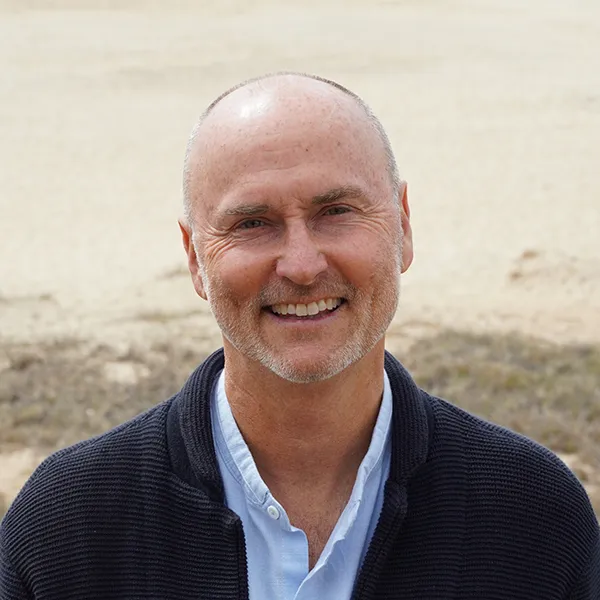
Written by Chip Conley

Something brought you here, searching for "midlife career change."
Maybe it's the Sunday dread. You know the feeling – that fog that settles in every weekend as Monday approaches.
Or maybe you're looking at your calendar and it hits you: your ladder is leaning against the wrong wall. You climbed it beautifully. It's just the wrong damn wall.
Or maybe you woke up one day and thought, "There has to be more to work than this."
Here's what I want you to know: you're not broken. What you're experiencing isn't a career crisis. It's a career chrysalis. And I've been there.
I'm Chip Conley. I founded a boutique hotel company in my twenties, ran it for 24 years, then sold it right after the Great Recession kicked my ass. At 52, I found myself temporarily adrift, nowhere near ready to retire but also not sure what was next.
Then Brian Chesky, the young founder of Airbnb, asked me to join his startup. I became what I call a "Modern Elder" – part mentor, part intern, offering my experience while learning like crazy from people half my age.
That midlife career change taught me something: this season of uncertainty you're in right now? It's not the end of something. It's the beginning of your most meaningful work.
Let me be straight with you – this isn't about chasing some fantasy or pretending you're 25 again. This is about aligning your work with who you've actually become.
Watch: Chip's TED Talk on Becoming a Modern Elder at Work
Why This Happens in Midlife
Look, our parents had it easier in one way. Their playbook was simple: education, 40-year career, retire at 65, done by 75.
That math doesn't work anymore.
The New Math of Longer Lives
Here's a number that stopped me cold: nearly one in four American workers is now 55 or older. That's according to the Bureau of Labor Statistics — roughly 25% of the entire labor force. In 1994, that number was barely 12%. This isn't a blip. It's a fundamental restructuring of who's working and for how long.
The Stanford Center on Longevity calls this the era of 100-year lives. Their "New Map of Life" research makes a startling projection: many of us can expect to work 60 years or more over the course of our lifetimes. Not the 40 years our parents planned for. Sixty.
But — and this is crucial — we won't work the way we do now. We can't. The Stanford researchers envision something more fluid: flexible routes in and out of the workforce, intervals for caregiving, health, education, and all the transitions that come with century-long lives. The old model of cramming 40-hour weeks into lives packed with parenting, family, and everything else? That's a script written for shorter lifespans.
And here's something that might surprise you: older workers aren't just staying in the workforce out of necessity. They're often the happiest ones there. AARP research found that 65% of workers 55 and older report being extremely or very satisfied with their jobs — higher than both Millennials and Gen Xers. So much for the "grumpy old worker" stereotype.
There's even a term for what's happening: "unretirement." A growing wave of people who retired are heading back to work — some for financial reasons, yes, but many because they discovered retirement wasn't what they expected. They wanted structure. Purpose. Something to do that mattered. By late 2024, roughly 20-25% of retirees were working part- or full-time jobs, with more actively looking.
Many of us are living to 95, maybe longer. Life isn't a one-tank journey where you fuel up with education in your twenties and expect it to last. It's at least a two-tank journey. And you just hit the pit stop.
So Why Does Midlife Career Change Happen So Often?
We've finally lived long enough to know what we actually want. After decades of making decisions based on what our parents expected, what society values, what pays the bills – we develop what I call "sage clarity." The ultimate midlife skill is knowing your own mind and heart. You couldn't have done this at 25. You hadn't lived enough yet.
Our values shift, too. What lit you up at 30 – the corner office, the title, the status – might feel hollow at 50. Maybe you had a health scare. Maybe you're caring for aging parents and suddenly life feels shorter and more precious. Maybe you're just bored with the old script and ready to write a new one.
And here's the thing: the workplace changed while we weren't looking. Yes, ageism is real. I'm not going to blow sunshine at you and pretend it isn't. But here's what's also real: wisdom, emotional intelligence, pattern recognition – these matter more than ever in a world changing faster than anyone can keep up with. You're not becoming obsolete. You're becoming essential in new ways. The question is whether you can see that in yourself.
Common signs you're ready? Sunday dread. Feeling invisible at work. That sensation your job no longer fits who you are, like wearing a suit that's two sizes too small. Pouring energy into work that doesn't feed your soul.
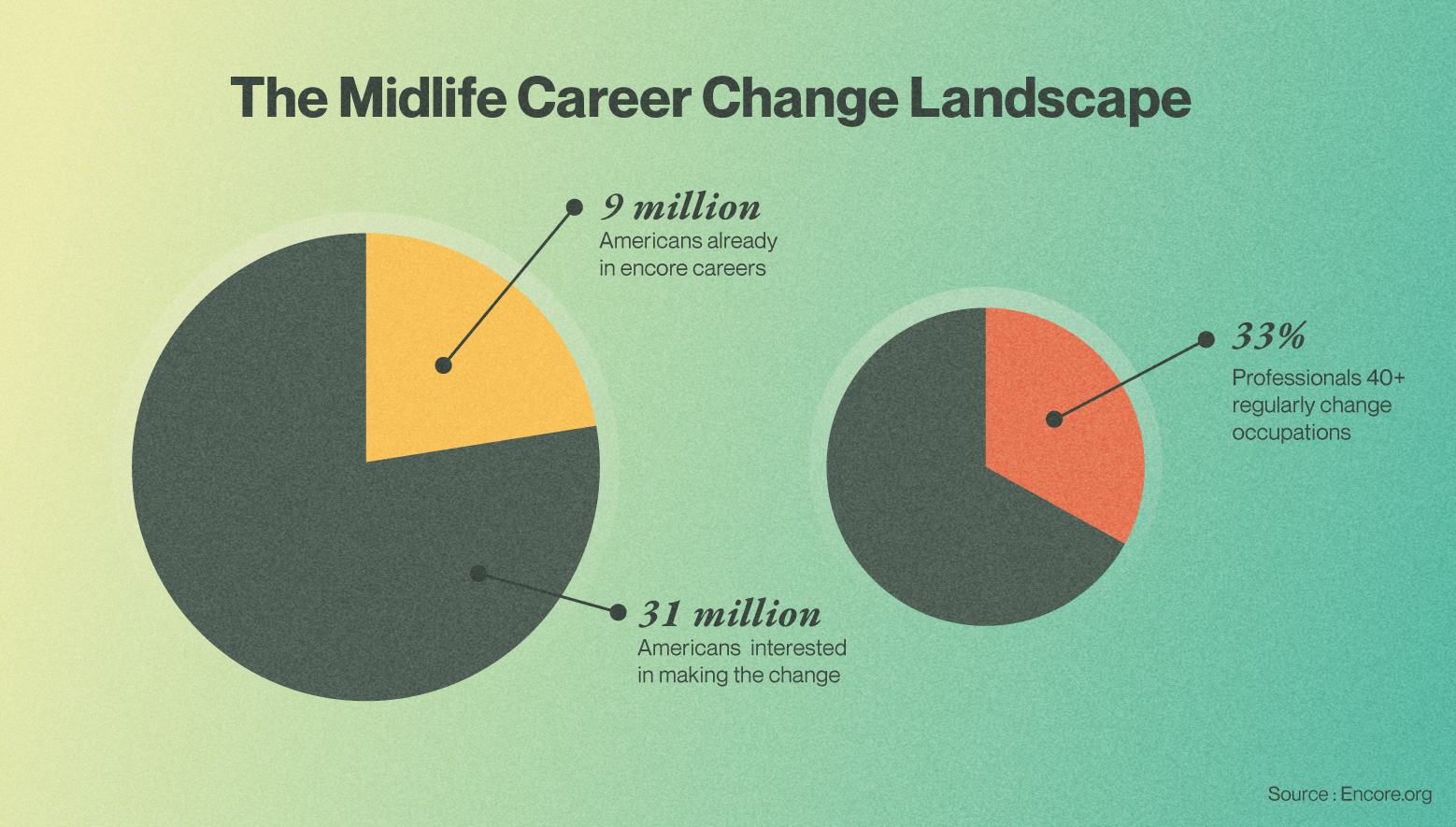
Research shows about one-third of professionals over 40 regularly change occupations. You're not alone in this. You're not crazy. You're right on schedule.
What "Midlife Career Change" Actually Means
Let me break this down because "career change" can mean different things, and the difference matters:
Here's the important part: midlife career change doesn't mean quitting tomorrow.
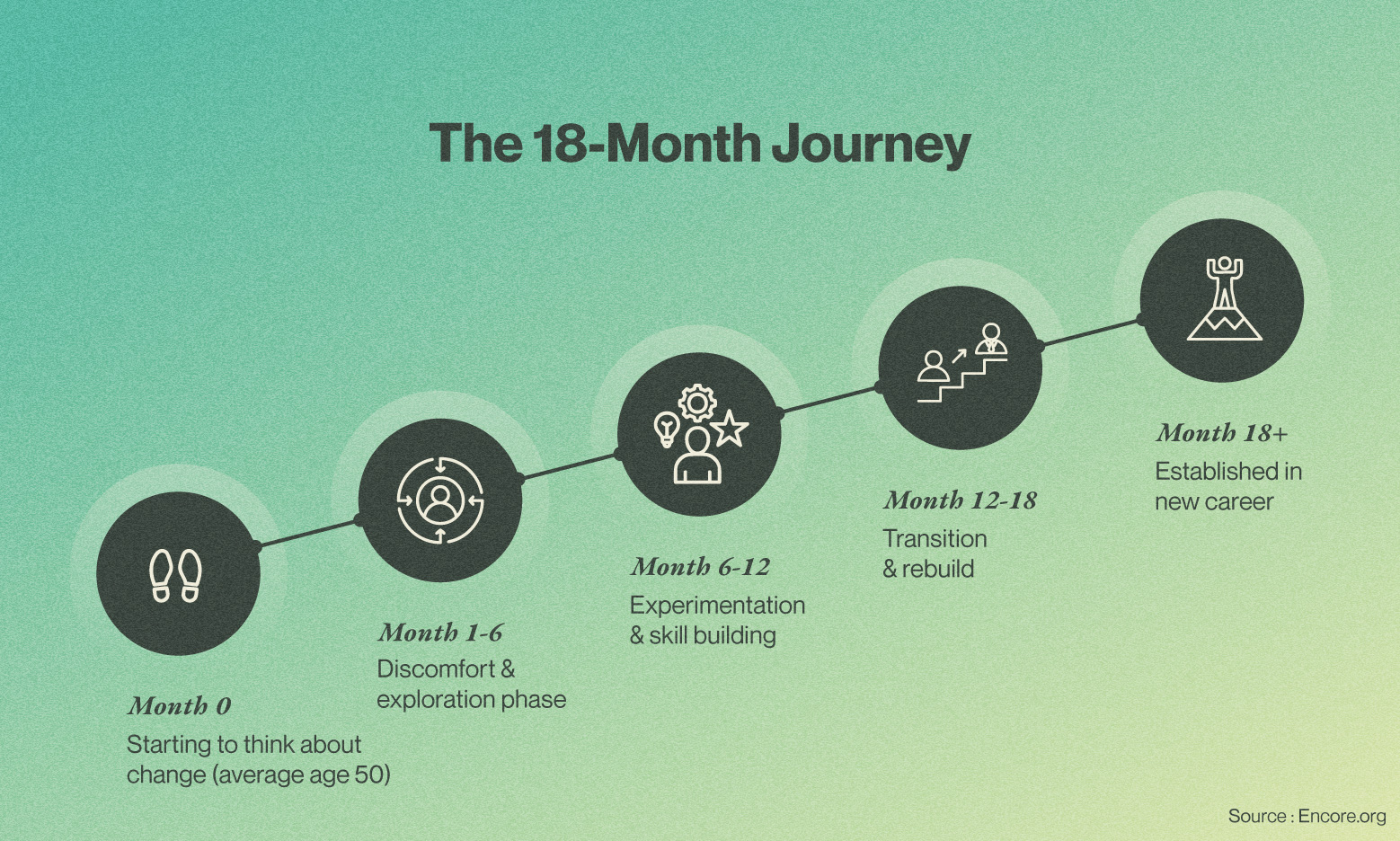
Research on people who successfully made encore career transitions found they started thinking about it around age 50 and took about 18 months to make the move. It's a season. An exploration. An experiment. Most people don't wake up one day, quit their job, and figure it out from there. That's the movie version. Real life is messier and slower and requires more patience.
You're not "starting over." (God, I hate that phrase. You can't un-live what you've lived.) You're evolving. There's a big difference.
And you're definitely not "too old." You're in a new chapter with different questions and deeper wisdom to bring to them.
Designing Your
Encore Career
There's a term that's been gaining traction: encore career.
I'll be honest — when I first heard it, I thought it sounded a little too cute. Like something a career counselor invented. But the more I've thought about it, the more I like the metaphor. Your first career was the main performance. An encore is what you choose to play when the audience wants more.
A MetLife Foundation study found that 9 million Americans between 44 and 70 are already in encore careers — work that combines purpose, passion, and a paycheck. Another 31 million say they want to follow suit.
What makes an encore career different from just... getting another job? The emphasis on meaning.
Most people pursuing encore work gravitate toward education, healthcare, nonprofits, social enterprises. They're less interested in corner offices and more interested in actually giving a damn about what they do every day. (Pardon my language, but at a certain point, you stop caring about being polished.)
The encouraging news? Many employers are waking up to this.
Intel has created programs to help employees transition into encore work, recognizing that being "a great place to retire from" matters as much as being a great place to work. And organizations like Encore.org have been matching socially-conscious midlifers with nonprofits since 2009.
Here's the thing: your encore doesn't have to be a 180 from your first career.
Maybe you use your marketing expertise to help a nonprofit tell their story. Or your finance background to serve on boards of organizations you actually believe in. The skills transfer. The motivation transforms.
Why a Portfolio Career May
Be Better Than a New Job
In Sweden, they call it a smorgasbord. In Hawaii, it's a pu pu platter. In your work life, it's a portfolio career.
Here's how it works: Rather than working exclusively for one organization, you work part-time in various capacities. A little consulting here, some board work there, maybe teaching a class or mentoring a few people. Not one demanding job that owns your soul — several smaller commitments that add up to something that actually fits your life.
I didn't invent this idea. But I've watched it become more and more common.
According to PwC, a quarter of all workers in the sharing economy are already 55 or older. And the pandemic turbocharged this trend — the number of global companies offering phased retirement more than doubled between 2020 and 2022.
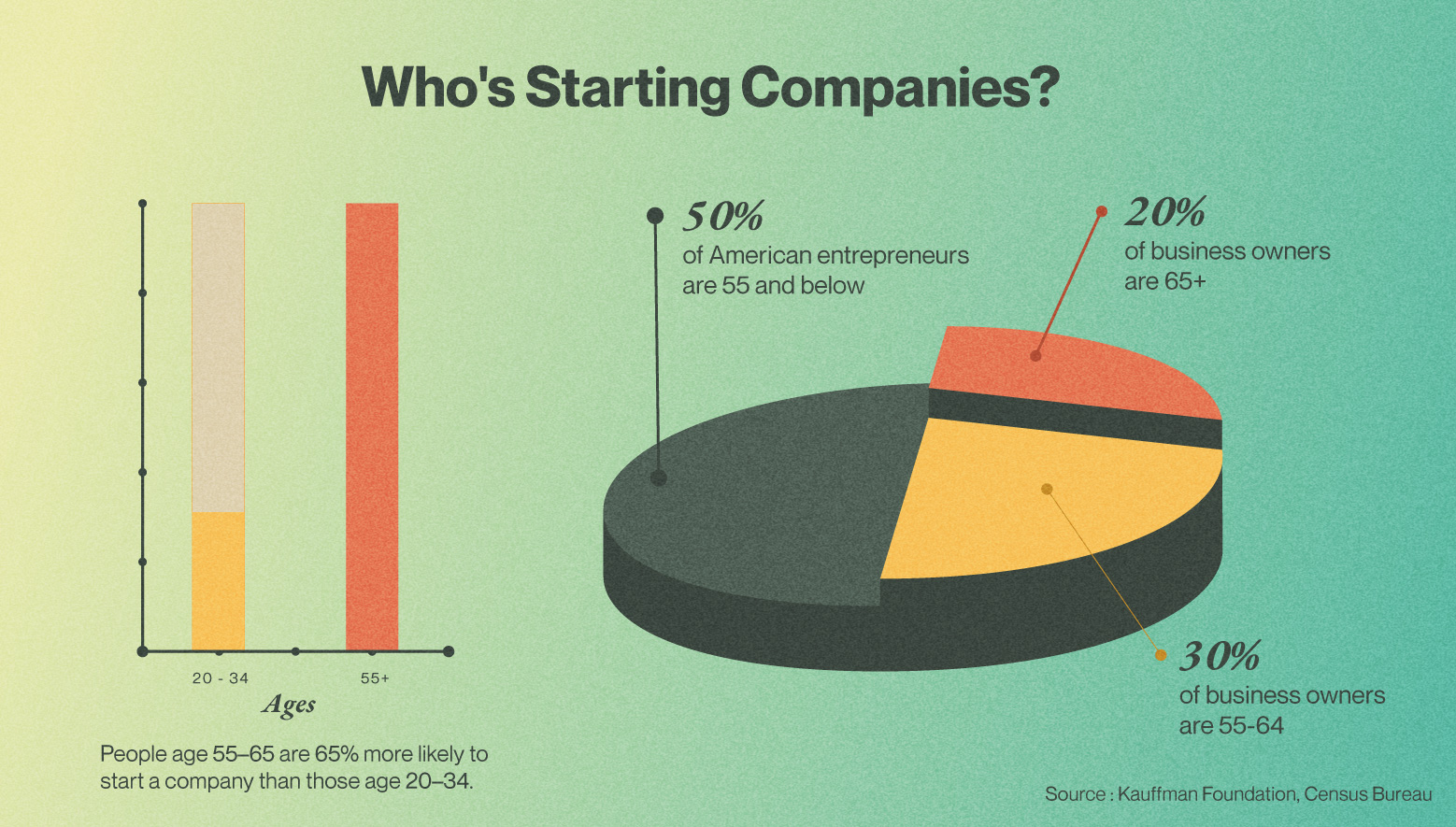
Half of American business owners are now 55 or older. Let that sink in. The Kauffman Foundation reports that people between 55 and 65 are 65 percent more likely to found a new company than those between 20 and 34. So much for the stereotype of the young tech entrepreneur in a hoodie.
What might your portfolio include? Consulting in your area of expertise — you'd be surprised how many people want to know what you know, especially after 10, 20, or 30 years in an industry. Board service for organizations you believe in. Teaching or coaching. Creative work you've always wanted to pursue but never had the time or headspace for.
The beauty of a portfolio career is that if one piece falls through, you're not devastated. You've got other plates spinning. And honestly? The variety keeps your brain sharper than any single job ever could.
Could you talk with your current employer about a phased transition? More companies offer this than you might think. Worst case, they say no. Best case, you buy yourself time to develop other pieces of your portfolio while keeping a stable income.
The Modern Elder Approach
After my AirBNB years, I learned our greatest midlife asset isn't what we know. It's how we combine what we know with our willingness to keep learning.
A Modern Elder is both mentor and mentee. Student and sage. Curious and wise. I know that sounds like a contradiction, but that's the whole point.
We offer our EQ (emotional intelligence) in exchange for learning DQ (digital intelligence) from younger colleagues. We bring pattern recognition and long-term perspective while staying open to fresh ideas. When a 28-year-old tells me about a new app or technology, I don't pretend I already know about it. I ask questions. I learn. And sometimes I can help them see how what they're building connects to patterns I've seen play out before.
Why does this matter for your career change?
Because it positions you not as someone desperate and clinging to relevance, but as someone offering irreplaceable value. You can connect dots others can't see. Your brain can traverse from logic to creativity more easily than it could at 30. You've developed what psychologists call "crystallized intelligence" – the ability to synthesize, to see the whole instead of just the parts.
When I joined AirBNB, I didn't pretend to know everything about tech. I asked what the team called "catalytically curious" questions – the kind that help everyone think differently. A 21-year-old colleague told me, "You have the empathic capacity to tune into virtually any frequency on the dial." That might be the best compliment I've ever received.
That's the midlife superpower. We've lived long enough to resonate with people at different life stages. We can hold space for complexity and ambiguity. We're not looking for simple answers anymore because we've learned life doesn't offer them.
This isn't about being the smartest person in the room. If you are, you're in the wrong room.
How to Navigate Your Midlife Career Change
Enough philosophy. Let's get practical.
Name Your Season
Where are you right now?
Discomfort: Something feels off but you're not sure what or what to do. You're in the fog. You just know you can't keep doing what you've been doing.
Experimentation: You're actively exploring, trying things on the edges, getting curious. This is the fun part, even though it doesn't always feel fun in the moment.
Rebuild: You've made a choice. You're building your new work life. This is where the real work happens.
Just naming it helps. And listen, you'll probably cycle through these phases multiple times. That's normal. That's how change actually works, not how LinkedIn posts make it sound.
Inventory Your Gifts
Take an hour this week. No phone. Just you and a notebook.
List your skills that energize you. Not the ones you're good at but hate. The ones that make time disappear. List experiences that shaped how you see the world. List your values now – not 20 years ago when you were trying to impress people or make your parents proud. List activities that make you lose track of time.
This isn't your résumé. This is your wisdom inventory.
What makes you uniquely valuable? What's your secret sauce? And don't be modest here. Nobody's reading this but you.
Experiment on the Edges
Don't quit your job tomorrow. Seriously, don't. Run small pilots instead.
Side projects in areas you're curious about. Volunteer or advisory roles that let you test new sectors without betting the farm. Classes that build new skills. Informational interviews with people in fields that intrigue you. A sabbatical if your company offers one (and more do than you might think).
Think reconnaissance missions, not commitments. You're gathering intelligence, not storming the beach.
Build Your Learning Plan
For me, midlife has been the best and worst of times. It's when I learned that getting older isn't about "growing up" – it's about "growing into," especially growing into your unique idiosyncrasies. Trust me, I've got plenty.
The ability to master transitions is now an essential 21st-century skill. It's not optional anymore. So what do you need to learn?
What new skills would make you more valuable? Who could be your "reverse mentor" – someone younger who can teach you? What makes you uncomfortable? That's often where growth lives, hiding in the places we'd rather not look.
One guy who came through the Modern Elder Academy was a 60-year-old pastor forced out of his church unexpectedly. He thought his résumé – all pastoral work – made him unemployable in the "real world." He was convinced nobody would want him.
But he leaned into learning about corporate culture. Took some classes. Asked a lot of questions. Now he thrives in business. His transition intelligence – his ability to navigate the in-between – carried him through.
Find Your People
Listen, midlife career change is not a solo journey. I don't care how independent you are.
You need peer groups going through similar changes. People who get it. Mentors who've navigated career changes in their 40s, 50s, 60s and can tell you what the road actually looks like. Midlife-friendly ecosystems like the Modern Elder Academy or Encore.org where you're not the oldest person in the room. Accountability partners who celebrate experiments, not just outcomes.
The right community normalizes the messiness. Reminds you that clarity comes from action, not overthinking. Tells you the truth when you need to hear it.
Financial Planning for Your
Midlife Career Change
Okay, let's talk about money. I know, I know — you came here for the inspirational stuff, but at some point we have to get practical or this whole conversation is just poetry.
Here's my confession: I'm not a financial advisor.
I'm a guy who sold his hotel company at the bottom of the market during the Great Recession, then joined a startup where part of my compensation was equity that, at the time, could have ended up being worth exactly nothing. (Spoiler: Airbnb worked out. But I didn't know that when I signed the papers.)
I've made financial decisions that kept me up at night. I've also learned a few things along the way.
The Bridge Job: Your Secret Weapon
There's a concept that saved more than a few people I know, and it doesn't get talked about enough. It's called a bridge job.
A bridge job is exactly what it sounds like — a role that bridges the gap between where you are and where you're going. It's not your dream job. It's the job that pays the bills while you figure out what your dream job actually is.
Here's why this matters: most people think they have two options:
Option A: stay miserable in their current job.
Option B: quit everything, burn the boats, leap into the void.
Very dramatic. Also very risky, especially if you've got a mortgage, kids in college, or parents who need care.
But there's an Option C: Find a lower-stakes job that covers your essentials and frees up mental bandwidth to explore. Maybe it's part-time consulting in your current field. Maybe it's something completely different — less prestigious, less demanding, but enough. Enough to pay rent. Enough to keep you in the game. Enough to buy you time.
I know a woman who left a brutal corporate marketing job and took a part-time gig at a local nonprofit. The pay was... let's say "modest." But the stress dropped by about 80%. She used the extra hours and headspace to get certified as a coach. Two years later, she's running her own practice and earning more than she did in corporate. The nonprofit job wasn't the destination. It was the bridge.
The point is: you don't have to fund your entire career change from your savings account. A bridge job extends your runway. And sometimes the bridge itself teaches you things you didn't expect to learn.
The Boring Stuff That Actually Matters
I'm going to rattle through some financial housekeeping here. It's not glamorous, but neither is running out of money.
First: beef up your emergency fund. You've probably heard the standard advice — save three to six months of expenses. For a career transition, I'd aim higher. Six to twelve months if you can swing it. That cushion isn't just about money. It's about having the freedom to say no to the wrong opportunity while you wait for the right one.
Second: take a hard look at your 401(k). If your income drops during the transition, you might need to reduce your contributions temporarily. That's okay. What's not okay is stopping completely and then forgetting to restart. Even small contributions matter because of compounding. Don't let a temporary career change become a permanent retirement savings gap.
Here's the part most people miss: think about your investment mix, too. If you're about to go through a period of income uncertainty, watching your portfolio swing wildly with the stock market can mess with your head. Some people find it helpful to shift a bit more conservative during transitions, maybe moving 5-10% more into bonds, just to sleep better at night. Then adjust back once things stabilize. (And yes, I'm legally obligated to say: talk to a real financial advisor about this. I'm just a guy who runs a midlife wisdom school.)
Third: know what you're walking away from. Before you give notice, understand your vesting schedule. Stock options, 401(k) matches, bonuses — these things have cliffs and timing. I've seen people leave two weeks before a chunk of equity vested. That's an expensive exit. If waiting another month or two puts real money in your pocket, wait.
Fourth: healthcare. God, I wish I didn't have to include this, but here we are. If you're leaving employer coverage, you need a plan. COBRA is expensive but buys you time. The Health Insurance Marketplace has options. A spouse's plan might work. Just don't wing it. Medical bills can blow up a career transition faster than almost anything else.
The Math Nobody Teaches You
Here's a reframe that helped me when I was staring at a spreadsheet trying to figure out if I could afford to make a change:
Stop thinking about annual salary. Start thinking about lifetime earnings.
Yes, you might take a pay cut to do something new. Let's say 20%. That sounds scary. But if the new path means you actually enjoy your work enough to do it for five or ten extra years? The math flips. You come out ahead. If it means lower stress, fewer health problems, and better relationships? The ROI is incalculable. (Try putting "didn't have a heart attack at 58" into a spreadsheet. It doesn't fit, but it matters.)
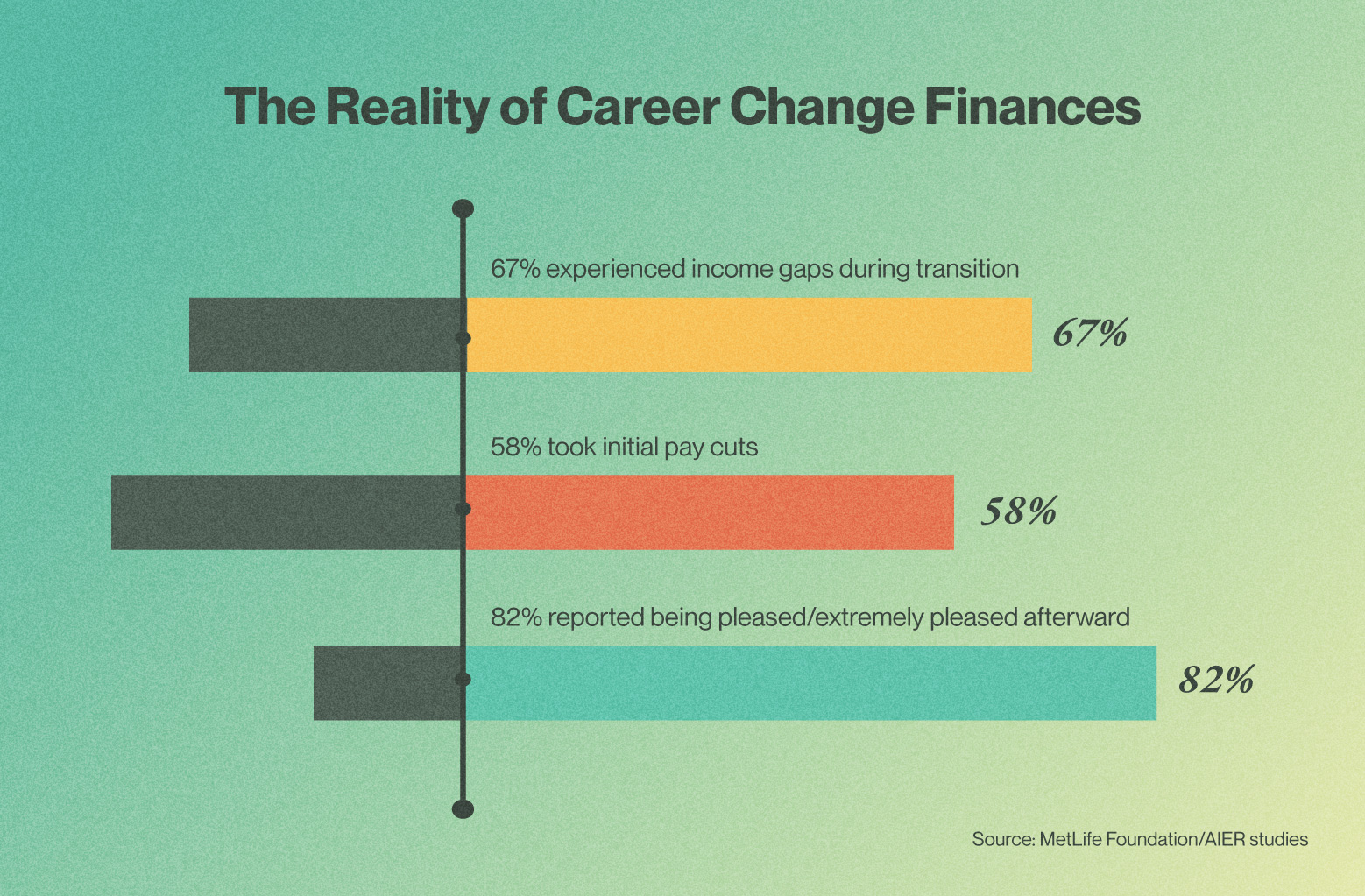
Research from the American Institute for Economic Research found that 82% of people who changed careers after 45 were pleased or extremely pleased with their new work. Pleased. That word matters. People who like their work perform better, get promoted more, and stay employed longer. Satisfaction compounds.
So when you're doing the math on whether you can "afford" a change, make sure you're doing all the math. Not just next year's income. The next twenty or thirty years of your working life.
The Three Big Fears
(And What's Actually True)
"I can't afford this."
Fair. Many midlife career changes involve initial pay cuts. I'm not going to lie to you about that. Studies show more than two-thirds of people who made encore career transitions experienced income gaps. 58 percent took pay cuts.
But here's what else is true: Research from the American Institute for Economic Research found that 82 percent of people who changed careers after 45 reported being pleased or extremely pleased with their new work. Pleased. Extremely pleased. Those are their words.
Do the math differently for a second. If you work five years longer because you actually enjoy what you do, that's five more years of income and Social Security contributions. Plus better flexibility. More purpose. Work you can actually sustain instead of grinding through.
Could your current employer support a phased retirement or portfolio arrangement? More companies are offering these. It doesn't hurt to ask. The worst they can say is no, and then you know.
"If I change what I do, who am I?"
This one cuts deep. I get it. I really do.
But here's the truth I learned the hard way: you were never your job title. I know that sounds like a greeting card, but it's real. You're a collection of values, experiences, relationships, wisdom. Your work should express who you are, not define who you are.
When I sold my hotel company, I went through an identity crisis. I'd been "boutique hotel guy" for 24 years. Who was I without that? It took me a while to figure out I was still me – just with more room to become who I was meant to be next.
This is actually liberating once you sit with it. Scary first. Liberating second.
"Nobody wants to hire someone my age."
Ageism is real. I won't sugarcoat that. I've seen it. I've felt it.
But here's your countermove: Stay current with skills. Not all of them, just the ones that matter in your field. Leverage your network – your "know-who" combined with your "know-how." Tell a clear story about your value that isn't defensive or apologetic.
Younger colleagues don't want recycled advice from 1995. They want pattern recognition. Emotional intelligence. Counsel from someone who understands today's landscape but can also see around corners because they've been around the block a few times.
That can be you. If you stay curious and relevant.
Real Stories
Let me share a few examples that might resonate:
A PhD who spent 15 years in museum administration realized people had always come to her for counsel. Like, always. Since she was young. She started a coaching practice on the side, kind of as an experiment. Discovered she was naturally gifted at it. Eventually went full-time as a professional coach and leadership author.
She told me: "If you'd said 15 years ago I'd be a coach, I'd have said you were crazy. But people have always been magnetized to me. I just didn't see it as a career until midlife."
An executive who'd led teams of hundreds at Cisco got laid off at 54. Through the Encore Fellows program, he joined a nonprofit helping first-generation college students get to college. 96 percent of them made it. That's incredible when you consider these are kids whose parents never went.
He had to learn humility. Going from big budgets to a tiny nonprofit meant sometimes being "the IT department" and fixing the printer. But his counseling skills as a Modern Elder were perfect. He could ask naive questions precisely because he wasn't the subject matter expert in education. Fresh eyes. Fresh advice.
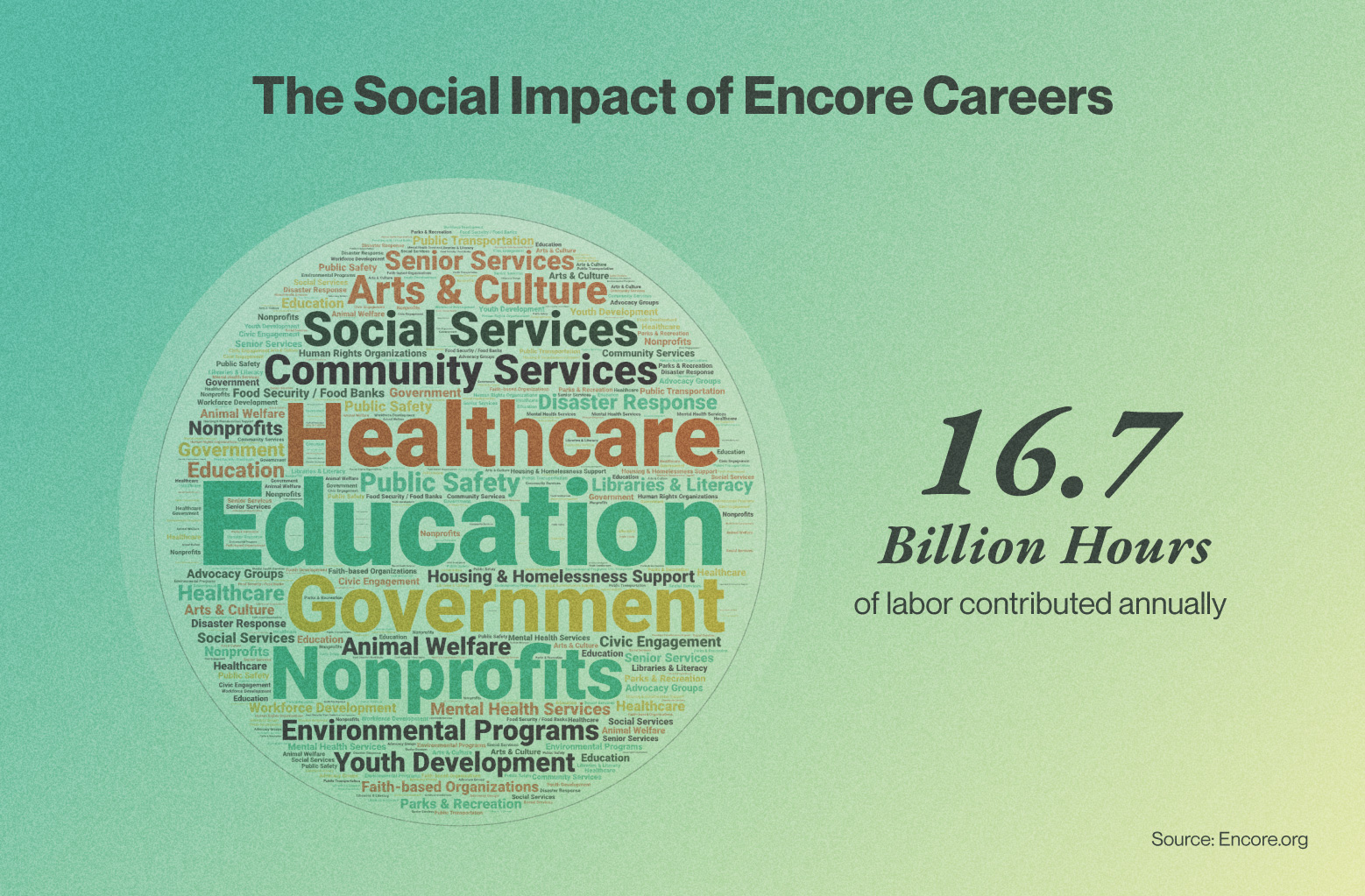
Research shows people in encore careers now perform an estimated 16.7 billion hours of labor each year in education, healthcare, government, and nonprofits. That's the massive societal impact of midlife career change. We're not just helping ourselves. We're helping the world.
A woman who'd spent decades prioritizing everyone else – kids, husband, parents, boss, neighbors – hit midlife and realized she'd "carved herself up into a thousand tiny pieces" until there was nothing left for her. She took time to refuel. Actually asked herself what she wanted for the first time in years. Created a portfolio career that honored her values.
The pattern? They all brought wisdom forward while staying curious. They allowed themselves to be both expert and beginner. They measured success by meaning, not just money.
You're Not Done – You're Evolving
Here's what I need you to hear:
This moment of uncertainty isn't a problem to solve. It's an invitation to grow into the next version of yourself.
You've spent decades accumulating knowledge, relationships, wisdom. The question isn't whether you still have value. You absolutely do. The question is: how will you repurpose what you've learned in ways that feel alive?
Midlife career change isn't about chasing fantasies or denying your age. It's about aligning your work with your wisdom, your values, and the reality that you likely have decades of good work left. Work that could matter more than anything you've done so far.
Clarity doesn't come from endless research or perfect planning. It comes from small experiments. Conversations with people doing work that intrigues you. Trying things and adjusting when they don't work. It comes from action, even messy, imperfect action.
So start small. Have that uncomfortable conversation with your boss or your partner. Take that class you've been thinking about. Reach out to that person whose career path intrigues you – they'll probably say yes to coffee. Experiment on the edges. Name what season you're in.
Growing and aging are the same thing. I believe that deeply. Your midlife career change isn't a midlife crisis. It's you growing into who you're meant to become next.
If you're looking for deeper support, explore MEAwisdom.com or consider joining us at the Modern Elder Academy. We've helped thousands of midlifers reimagine and repurpose their lives through what we call "long life learning." People come from all over the world to our campuses in Baja and Santa Fe to press the reset button at midlife.
You're not at the end of something.
You're at the threshold of your most meaningful work.
Step through.


About the Author
Chip Conley
MEA Co-Founder and Author of Learning to Love Midlife: 12 Reasons Why Life Gets Better with Age
A three-time TED speaker on the big stage, Chip Conley is one of the world's leading experts at the intersection of business innovation, psychology and spirituality.
As one of the creators of the boutique hotel movement and the "modern elder" to the young Airbnb founders, Chip's been a disruptor and expert on entrepreneurship and business leadership. He’s a globally-recognized thought leader on the future of work and the competitive advantages of a multi-generational workplace.
Inspired by his experience of intergenerational mentoring as a “modern elder” at Airbnb – where his guidance was instrumental to the company’s extraordinary success – Chip founded MEA and has since dedicated his midlife years to reframing the concept of aging and helping people navigate midlife with a renewed sense of purpose and possibility.
Sources & Further Reading
Research Studies Cited:
- 1MetLife Foundation/Civic Ventures (2011). "Encore Career Choices: Purpose, Passion and a Paycheck in a Tough Economy." [Study on 9 million Americans in encore careers]
- 2Kauffman Foundation. "The Coming Entrepreneurship Boom." [Research on entrepreneurship rates among ages 55-65] https://www.kauffman.org
- 3MetLife Foundation/Civic Ventures (2012). "Bridging the Gap: Making Encore Transitions Easier." [Study on career transition timelines and financial impacts]
- 4American Institute for Economic Research (AIER). "New Careers for Older Workers." [Research showing 82% satisfaction rate among post-45 career changers]
- 5Penn Schoen Berland. "Career Change Statistics Study." [Data on one-third of 40+ professionals changing occupations]
- 6Encore.org Research. "Hours of Labor Study." [16.7 billion hours contributed by encore career workers] https://encore.org
- 7U.S. Bureau of Labor Statistics. "Labor Force Projections to 2024."
- 8Stanford Center on Longevity. "The New Map of Life."
- 9AARP. "The Multi-Generational Labor Force."
- 10Pew Research Center. "The Growth of the Older Workforce."
- 11Fidelity. "6 Crucial Money Moves for a Midlife Career Change."
Organizations for Midlife Career Change:
- 1Encore.org - Matching socially-conscious midlife professionals with purpose-driven work https://encore.org
- 2Modern Elder Academy - The world's first midlife wisdom school https://www.meawisdom.com
- 3AARP Work Resources - Job search and career change resources for 50+ https://www.aarp.org/work/
- 4Stanford Center on Longevity - Research and resources on 100-year lives
Books Referenced:
Note: All research cited represents peer-reviewed scientific studies or work by credentialed experts in psychology, gerontology, and life transitions. For the most current research on midlife development, consult the academic databases at major research institutions including Stanford Center on Longevity, Harvard Study of Adult Development, and UC Berkeley's Institute of Personality and Social Research.