
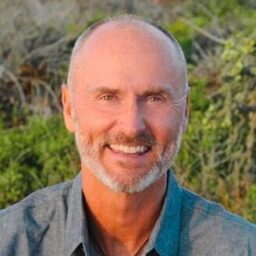
A wailing siren and a soft, reassuring hand. That is all I remember from my ambulance trip in suburban St. Louis during a sticky, humid summer day. My heart had stopped just as the paramedics arrived right after giving a speech. “Break a leg,” is what they tell you before going on stage. Well, I’d broken my ankle a month earlier at Gavin Newsom’s bachelor party, had a serious bacterial infection in my leg, and was on strong antibiotics due to my septic leg. What the heck was I doing on stage half a continent away from home in my condition?! This was just a symptom of my overstuffed life.
The first time I went asystolic (a word I’d never heard before), I came back from “the other side” and started telling those around me about what I saw. Over the next 90 minutes, I went flatline a few more times and had the same vision each time.
I was in a sunlight-filled Swiss chalet in a large second floor living room. A riot of light flooded the skylight and cast a kaleidoscope of colors on the walls. I was flying in the middle of this vaulted room sharing the air with a dozen small birds that were chirping their messages to me, which I miraculously understood. They told me that the world is full of awe and I just needed to slow down to see it.
I had wings that could transform into arms so that I could extend my hands ten feet to the floor to touch the sensuous, viscous, tropically-scented oil that was slowly moving across the dark oak floor toward the stairs where it was slowly dripping down the stairs. All of my senses were on heightened alert.
I was naked with the exception of my feet in which I was wearing two fluffy, white slippers, the left one saying “Slow” and the right one saying “Down.” Ironically, just three years earlier, we’d opened the upscale Hotel Vitale on San Francisco Bay with these slippers in every guest room.
Everything was in slow motion. It felt a little like that scene from “American Beauty” in which the melancholic teenage boy shows his girlfriend the video of the dancing plastic bag in the wind and says, “Sometimes there’s so much beauty in the world, I feel like I can’t take it.” But, the reality was I could take it and felt so serene and safe. That’s why it was so jarring to repeatedly come back from this time-stands-still bardo world to the sirens, the ER fluorescent lights, and the scurrying world of a medical emergency.
Death is the great boundary marker of life. We talk about longer lifespans, purpose, legacy, and reinvention, but most of us never intentionally look into the face of death until we have to. That’s why the New York Times story about 700 people gathered at the International Association for Near-Death Studies (IANDS) conference in Chicago is so revealing — not for its fringe elements, but for what it shows about how humans yearn to understand mortality and what lies beyond.
At the conference, near-death experiencers — people who have truly been to the brink — didn’t share eerie scandal stories. Instead, they described profound shifts: a sense of peace, love, and connection that reoriented how they live. One man spoke of his NDE from a violent car accident, how surrendering to what felt like death filled him with gratitude and transformed how he treated his family and himself.
NDEs are not just compelling because of what they might say about an afterlife. They matter because they sharpen what it means to be alive. Research shows that many people who report NDEs experience a lasting reduction in fear of death and a deepened sense of connection to something larger than themselves — even if they interpret the experience differently (spiritual, psychological, or neurological).
For many at the conference, these experiences were both solace and community. People who had been dismissed by organized religion or left those institutions found in IANDS a space where their experiences weren’t mocked or ignored — where grief, wonder, confusion, and hope could coexist.
But the story also reminds us that meaning doesn’t come automatically from a near brush with death. Even the article’s author — a person without a declared spiritual framework — found value not in proving an afterlife but in sharing stories, feeling understood, and verbalizing loss she had carried for years.
This resonates deeply with the midlife journey: the work isn’t about “solving” death. It’s about engaging with the reality of loss so we can live more fully — more courageously, more deeply, more generously — while we still can. In midlife we don’t just accumulate years; we integrate them. NDE stories invite us to do just that: to embrace mystery without fear, to tell our stories without shame, and to build compassionate community around our most vulnerable questions.
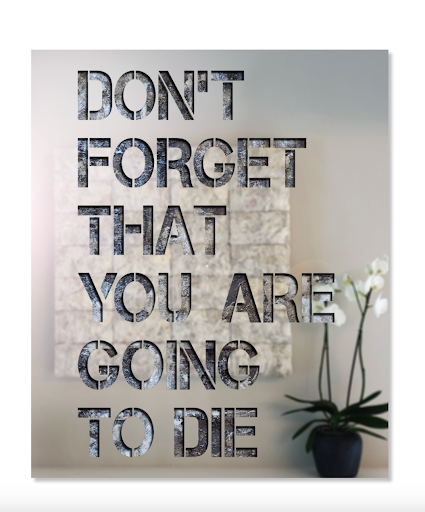
Ultimately, looking mortality in the eye doesn’t make life smaller. It makes life bigger — more reverberant with purpose, connection, and presence. For me, whether it was dying nine times over ninety minutes at age 47 in 2008 or facing stage-3 prostate cancer now which is growing again, my “memento mori” philosophy of facing death helps me see every day as a bonus. And, that feels sooo good.
-Chip