
“We are bending the arc of ageing – we are pathfinders. Subsequent generations will learn from our triumphs and tragedies. That is our privilege.”
Youth is Wasted on The Young
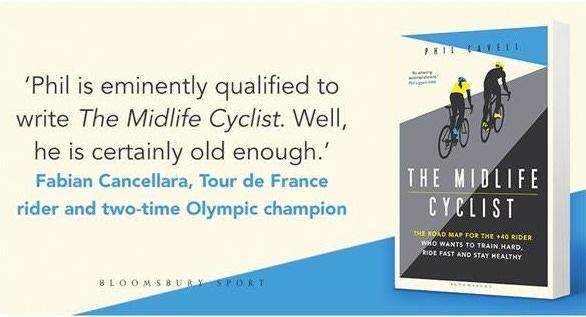
The Midlife Cyclist opens with a younger version of myself floundering in a bicycle race beyond my ability. Profoundly out of my depth, I nevertheless manage to stowaway in the race-winning breakaway.*
Whereupon I am inevitably exposed as an unworthy interloper – the weakest link. In a futile gesture to earn my place in the hallowed group, I continue to fully contribute to the group effort until I black-out on the bike. Comedically suspended by centrifugal forces for more than a few moments, until I crumple in front of the assembled spectators. Still blissfully asleep.
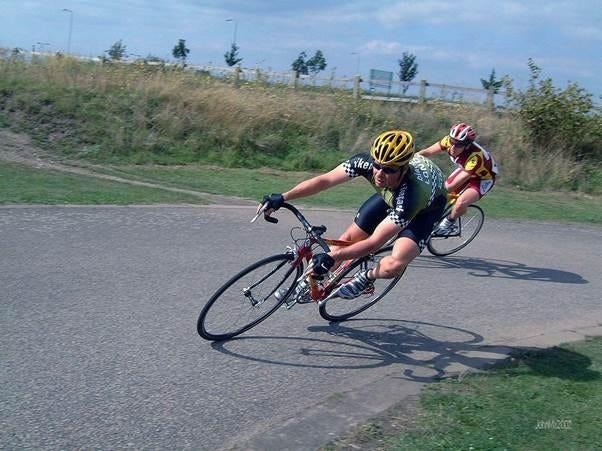
Clarie’s Corner – Eastway in London. Still awake at this point.
Version 1 or Version 2?
“But still, dammit – every synaptic twang of racing a bike that fast was addictive, irreplaceable and still grieved by the older man.”
A few decades later and my older self has questions…
Should I, or indeed could I, ride like that now?
What stops me? Accumulated wisdom? Reduced competitive drive? Grudging acceptance of reduced physical capability? Or, more pertinently, some dulled awareness that riding like this at fifty-eight (my age when the book was written), would symbolise hitherto unexamined levels of idiocy.
In many ways I feel a better person than the younger version. Sure, Version 1 could race bicycles in the sunshine to a pretty good level (despite the above debacle). But Version 2 is calmer, more humble and overwhelmingly cognisant of what is fundamentally important within a tiny sliver of ephemeral existence.
But still, dammit – every synaptic twang of racing a bike that fast was addictive, irreplaceable and still grieved by the older man.
The Midlife Cyclist is a conversation with like-minded souls, based entirely around the realisation that I couldn’t and anyway, shouldn’t, race or ride to that level anymore. BUT, there is a world of possibility about what folk my age can do if they are still minded to think of themselves as athletic.
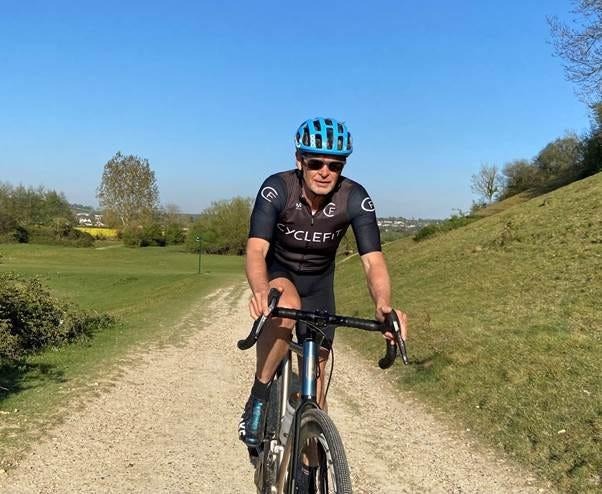
The Midlife Manifesto – Doubling Down on First Principles
As someone who has worked for twenty-five years in an evidence-based, multi-disciplinary team, within the arena of cycling-biomechanics, it should be no surprise that I would seek to double down on first principles as I sought to join the dots of The Midlife Manifesto. I will share with you now a little of my thinking and the central pillars of the book that emerged as a consequence.
TMLC Pillars – Grow Old. Get Fast. Don’t Die.
“For every headwind there is a strategy that will help offset the worst effects of the Biological Taxman.”
1. Evolutionary Irrelevance (Grow Old)
We did not evolve to live beyond thirty years of age, nor to ride bicycles (blame the Victorians). We can be forever shackled or liberated by that knowledge. Four thousand nine hundred and ninety-nine* generations of modern humans were not remotely interested in exercising into and beyond middle-age. We are the five-thousandth generation, and we are. We are bending the arc of ageing – we are pathfinders. Subsequent generations will learn from our triumphs and tragedies. That is our privilege.
2. Headwinds Are Real
Declining Chronotropic Response (declining maximum heart-rate)
Sarcopenia (muscle-fibre loss)
Senescence (process of cellular biological aging)
Hormonal shifts (ahem…)
To mention a few. The complete list can get a little depressing in print.
BUT.
Cyclists are great at dealing with headwinds – all of bike-racing is predicated upon sharing or hiding from this invisible force.
For every headwind there is a strategy that will help offset the worst effects of The Biological Taxman.
3. The Plausible Impossible (Get Fast)
Midlife athletes can perform at an extraordinary level. Very occasionally because they are outliers, who seem impervious to the rules of biology and physics.
BUT.
Generally speaking, there are no accidently fit and fast midlife athletes. Midlife Cyclists are fast because they understand that fitness is fundamentally iterative and requires their body (and mind) to function most of the time in equilibrium or homeostasis. Inputs and outputs. Their sleep, nutrition, social interaction etc are equal to the stressors of: training, work, life, events etc. They understand that their physiology cannot differentiate between the stress of an argument with a loved one, from a weights session at the gym or a 50km bike ride in the hills. Stress is stress. Some is essential but too much is corrosive.
4. Don’t Die (& The J-Curve)
“Exercise is overwhelmingly the greatest medicine the pharmaceutical industry never invented.”
Exercise is overwhelmingly the greatest medicine the pharmaceutical industry never invented.
It increases our lifespan and healthspan. Exercise builds physical and mental health and resilience.
Cycling is a superb ingredient to add into the exercise mix because it allows the individual to tailor a precise amount of intensity, without trauma to the joints and muscles.
The Right Prescription
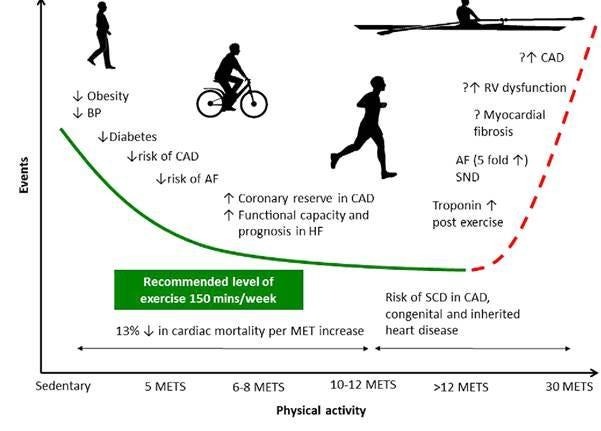
The amount of exercise that is healthy as we progress through midlife has been the subject of a huge amount of controversy and 20,000 words in The Midlife Cyclist. Some of chapter three is a conversation around the J-Curve paradigm – where exercise levels are initially positive for health, before turning strongly negative.
The J-Curve has long been catnip for poorly appraised journalists looking for a quick headline at the expense of midlife folk seeking to stay fit.
The Midlife Cyclist takes the less travelled route to thoroughly understanding what the J-Curve really means for most of us. I spoke to the doctors behind the research and who discovered the paradigm to arrive at a more rational and positive conclusion about what the J-Curve is telling us.
The Cycling Addiction
Which brings us to my new book, The Cycling Addiction. And the search for meaning on two wheels goes even deeper. Why for some of us moderation with respect to exercise and riding is a more difficult conversation.
Or: “Why is pain no signal to stop?”
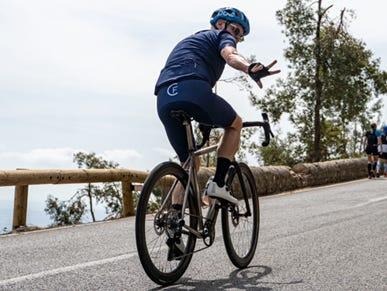
Still out there – Sa Colobra in Mallorca
Glossary:
*Breakaway: group of riders work together to stay away from the chasing peloton. The winner will sprint for victory from this bunch.
*Assuming modern genome is around 150,000 years old. Other points on the continuum are available.
–––––––––––––––––––––––––––––––––––––––––––––––––––––––––––
LIVE EVENT with Phil Caviell and Gerardo Capiel
Ride Smart, Stay Healthy: A Midlife Road Map for Cyclists 40+
April 22 | 11 AM PT | 2 PM ET
Join author Phil Cavell along with Gerardo Capiel and host Derek Gehl for this live chat.
A lot of what we’ve been told about cycling and aging – what’s safe, what’s smart, what’s possible after 40 – is overdue for an update.
Host Derek Gehl brings together two of the most compelling voices on midlife cycling: Phil Cavell, co-founder of Cyclefit London and author of The Midlife Cyclist, and Gerardo Capiel, former Google executive turned cycling guide and founder of Vine Trail Adventures in Napa Valley. Between them, they’ve got the biomechanics, the lived experience, and enough to bust a few myths along the way.
Whether you’re a serious rider, thinking about getting back on the bike, or just bought an e-bike and aren’t sure where to start — this one’s for you.
Register for this live Zoom conversation here