
After more than 50 years as a photographer, Drew Hyman ran into a problem he never saw coming. He didn’t know who he’d be once he stopped taking pictures.
Photography had never been just a job for Drew. Over the course of his career, he became part of the families he photographed, watching children grow up in front of his camera, shooting their bar and bat mitzvahs and Sweet 16s, then their weddings, and eventually their own kids. One family stayed with him for 41 years.
His camera gave him a career, certainly. But it had also given him something much harder to replace.
“I loved giving them a product that captured either a moment in time or their true personalities,” he says.
People trusted him with the moments they wanted to remember, and the work made people happy. It made him feel useful and appreciated. After more than five decades, it had become nearly impossible to separate what Drew did from who Drew was.
So when the business began slowing down, the question wasn’t really whether it was time to retire. It was what happens when the thing that’s given your life purpose for most of your adulthood starts to disappear.
A few years on, Drew has found an answer. You don’t necessarily replace one big purpose with another. Sometimes, you build a life out of a lot of little ones.
The camera that changed everything
Drew was 17 when he picked up his first camera. Connecting with people hadn’t always come easily before that, but something changed once he started taking pictures.
“It was almost like the camera came between the two of us, and it opened up another world,” he says.
One afternoon, Drew was walking around his Newton, Massachusetts neighborhood when he spotted the three-year-old girl who lived across the street. He asked her mother if he could take some pictures, and she agreed.
So, Drew posed the little girl against a tree, took the photographs, went home and developed them. Then he brought the finished pictures back to her parents.
Her parents loved them and asked if they could buy them. Drew had meant to give them away, but sure. Then they asked if he could photograph their son.
Word began to spread. Before long, Drew was photographing children around the neighborhood, then he connected with a local children’s clothing store, which led to more work. Families started booking him year after year, and soon they were booking in advance for weddings and bar and bat mitzvahs.
A career had found him, and for decades he loved it. He worked for himself, built relationships with three generations of the same families, and traveled during his slower seasons. He even survived the switch to digital, which at the time felt like “a sledgehammer coming down on my head.”
Drew adapted. But there was another transition coming that he couldn’t solve with new equipment or new techniques. He was getting older, and eventually the business slowed.
“It’s hard to retire, to give up what you’re so connected to and to lose that feeling that you are appreciated and that you are doing something to make people happier,” he says.
For the first time in more than half a century, Drew had to contemplate a life where photography might no longer be the focus.
“What am I going to do for the rest of my life?”
Around this time, Drew was catching up with his sister-in-law when she asked what he had been up to.
His answer was the question occupying his entire life – trying to work out what to do with the rest of it.
She told him she might have something he’d be interested in. Her husband, Paul Gilbert, had just come back from a workshop at MEA.
Drew went online, had a look, and thought it looked like his kind of thing. He signed up for Baja, then COVID happened.
Three hundred faces on a screen
Instead of finding himself in Mexico surrounded by a new group of people, Drew was at home in 2020, isolated like the rest of the world.
With COVID making the Baja workshop he had planned to attend impossible, Drew signed up for Navigating Transitions Online instead.
Then one day, he opened his laptop and found hundreds of smiling faces on the screen, music playing in the background, people moving to it.
After months of isolation, Drew was staring at roughly 300 people who seemed delighted to be together, even if “together” meant appearing in little boxes on a screen.
“I was just smiling from ear to ear,” he says. “I said, ‘Oh my God, this is unbelievable.'”
Then people started talking, and they went straight past the small talk. They shared what was happening in their lives, the transitions they were in, the questions they were wrestling with.
He had spent his career discovering that a camera could remove some of the barriers between people. Now, he was discovering that a computer screen could do something similar.
“The energy, the intellectual pursuits, the content, everything about it just turned me on,” he says.
He had found something. More importantly, he had found people.
“These are my people”
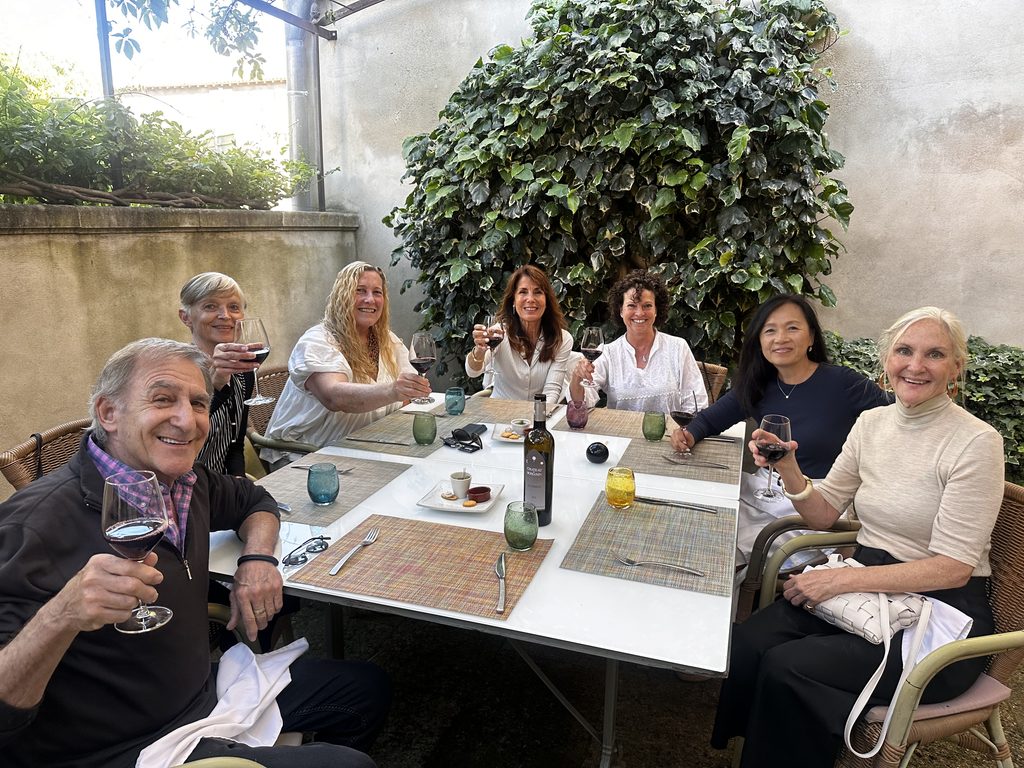
When Drew was finally able to get to Baja in person, the connection he had made online found a physical home. The setting, the conversations, a room full of people asking many of the same questions he was asking.
Drew remembers thinking, “These are my people.”
And he kept coming back. This coming winter will be his sixth time joining us for our Winter Re|Fresh retreat. He also attended The Bonus Round in Santa Fe, a workshop that spoke directly to the transition he was experiencing. How do you find purpose in the chapter that follows your working life?
But if you ask Drew what has kept drawing him back, his answer comes down to something simpler than workshops.
“The community is a big hug,” he says.
There is something he notices again and again among the people he meets at MEA.
They’re curious. Curious about their own growth, about other people, about what might make life “fuller and more beautiful and more connected.”
And within that larger group, Drew says, “it’s very easy to find your people within the people that are your people.”
Then he went a step further and started building a community of his own.
One hundred countries, and then what?
Photography wasn’t Drew’s only passion. Travel had been woven through his life for decades, and working for himself meant he could take advantage of the slow months.
If he knew someone who lived somewhere interesting and received an invitation, he was likely to get on a plane. South Africa, India, he went wherever curiosity took him.
On a group trip to India, he met an 88-year-old woman who introduced him to the Travelers’ Century Club, for people who have visited 100 countries or territories.
Drew had a new goal before the conversation was over. He went home, found his list and started counting. Years later he stepped onto a dock in the Falkland Islands and realized he had done it.
“100!” he yelled. “I did it!”
But that left him with the question, what next?
He decided his next phase of travel should be less about collecting destinations and more about staying somewhere long enough to know what living there felt like.
Then he thought about the people he had met through MEA. What if he traveled with them?
At a gathering in Santa Fe, Drew shared the idea with another alum, Betsy Benoit. She agreed immediately.
“I want to do that with you.” And so the Alumni World Travel Experience started.
A villa, a castle and no itinerary
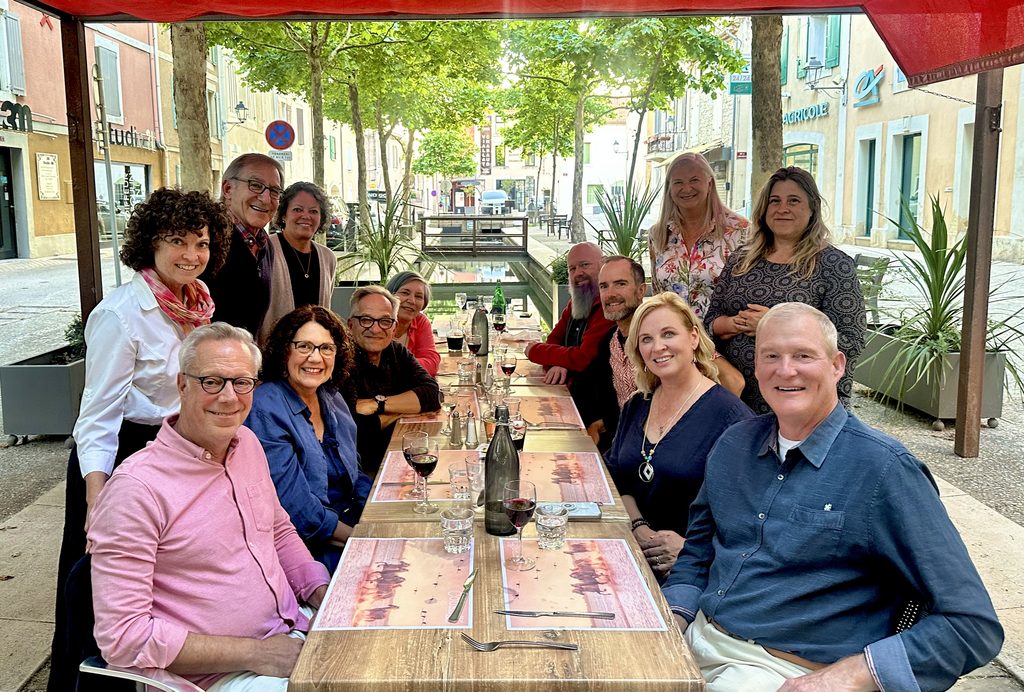
For their first experience, Drew and Betsy rented an eight-bedroom villa in Provence and invited MEA alumni to join them for four weeks.
There was no group itinerary, and people could spend their days however they wanted. Some nights guests would cook group dinners together, other nights they went out, and sometimes, people broke into smaller groups and explored.
“It’s very organic,” Drew says.
The structure, or lack of one, left room for relationships to grow, and he loved watching them form.
The next year they did it again, this time in Umbria, staying in a castle in a medieval town during a two-week medieval festival. This fall they’re headed to Portugal’s Douro Valley.
The man who had come to MEA wondering what he’d do with the rest of his life was now creating experiences for others.
And that’s the interesting part of Drew’s transition. He never found the thing that replaced photography. He stopped needing one.
The big P and the little p’s
One idea that resonated with Drew during this transition was the distinction between a “Big P” purpose and the many “little p’s” that can fill a life.
For most of our working lives, we may have the Big P – the central purpose around which so much of our identity, time and sense of contribution is organized.
When it goes away, the temptation is to believe we need to find another one. We look for another career, another mission, another giant answer to the question, what am I here to do now?
Drew’s life now has those little p’s everywhere. There’s the Alumni World Travel Experience. There’s Community Servings, a nonprofit where he volunteers in the kitchen preparing medically tailored meals for people living with serious illnesses. He also helps raise money for the organization.
Tennis, biking, kayaking, a huge circle of friends. Three grandchildren who call him Papa D, a name he invented himself because he worried their other grandfather might want Papa.
“It makes my heart melt every time they call me that,” he says.
And there’s love. A couple of years ago Drew met someone who had previously been married for 42 years. They both came into it with a life already built, and Drew appreciates what that makes possible. Two people who are well-formed, with their own interests and independence, who also like having each other around.
“Between all my interests, volunteering, and community, I’ve got a huge circle of friends,” he says. “I’ve pretty much been able to fill up my big P with a lot of little p’s.”
Life, Drew says, is good. Really good.
Every once in a while, someone still asks him to pick up the camera again. He might say yes to a headshot, but these days it has to be on his terms.
After decades of photography dictating the rhythm of his life, Drew has reached a wonderful point where work is the thing interfering with everything else he wants to be doing.
A place to begin
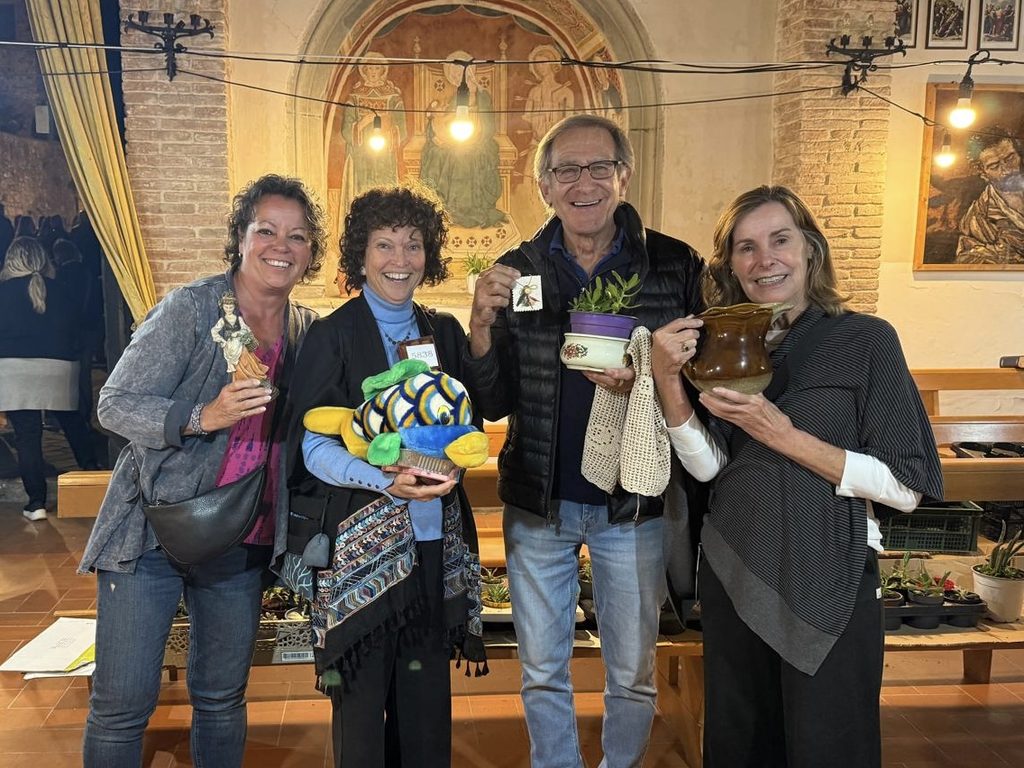
Drew’s first real experience with MEA happened at home, through a laptop screen.
He didn’t know where it would lead. All he knew at the time was that the life he had built was changing, and he wanted to understand what might come next.
That may be close to where you are. Maybe a career that used to define you doesn’t fit the way it once did. Or you have a relationship, a role or a home that’s changing shape.
Transitions have an uncomfortable way of asking us to move before we have the whole picture.
Drew’s story is a reminder that you don’t need to know exactly where you’re going to take the first step.
You just need somewhere to begin.
____________________
If you’re searching for community and looking for a getaway this holiday season, join us in Baja for our Winter Re|Fresh happening December 19, 2026 to January 4, 2027. Stay as little as three days or as long as you’d like. Drew will be there too. 🙂